Our Melanoma Center is designed to give you the comprehensive care and attention you deserve. With access to a multidisciplinary team, our patients benefit from a coordinated approach to treating, managing, and preventing every type of melanoma. You’re in good hands with us.

What sets us apart
Personalized treatment plans
Our pans according to patient specific needs may include standard screenings for low-risk patients to full body scans for patients at a higher risk. We also offer advanced therapies including immunotherapy, giving our patients even more hope against aggressive forms of melanoma.
Extensive Experience
Our surgeons are skilled and experienced in a range of procedures, from standard mole removals to more complex resections and plastic surgery reconstruction. Our experienced and diverse group of surgeons allow patients to get all their needs met in one place.
Promising Treatments
As a major academic facility, we are constantly conducting research to improve our understanding of melanoma and other skin cancers. As a result, our patients can get access to clinical trials for promising treatments.

Our program is proud to be recognized as one of the top in the nation by US News & World Report

Story of Hope: Metastatic Melanoma
After being told he had just six months to live, Stan Adler was determined to keep fighting. Faced with metastatic melanoma that had spread throughout his body, he carefully researched his treatment options and turned to NewYork-Presbyterian/Columbia. Through an intensive course of high-dose IL-2 therapy, Stan saw his tumors disappear and was ultimately declared to have no evidence of disease. Years later, he reflects on the difficult treatment, the milestones he has been able to experience, and the second chance that changed his perspective on life.
Melanoma is a type of skin cancer that originates in the cells that produce melanin, which gives skin its color. By most measures, melanoma is one of the most common forms of cancer.
Learn more about:
There are many treatment options available for melanoma. Get the facts on:
Scans and Screenings
Your comprehensive care begins with a thorough screening from your scalp to your toes by one of our dermatologists. This visual check helps us catch any signs of possible cancer so we can treat it and keep it from spreading further.
For high-risk patients, we offer full body scans with MoleMap technology. This procedure images as much skin as possible, then uses a dermoscopic camera that takes detailed photographs of any moles, lesions, or other potentially cancerous spots. These images are then studied by a dermatologist and can be archived for reference later, helping us track the progress of certain areas and improve your treatment plan. This procedure is non-invasive.
Non-Surgical Therapies
We offer the full spectrum of non-surgical options for your melanoma treatment. This includes general chemotherapy as well as targeted radiation therapy. For instance, gamma knife surgery is a completely non-invasive form of radiation that lets us send beams of highly focused gamma radiation at a tumor or lesion, sparing healthy skin while destroying the cancer.
Surgical Therapies
If surgery is needed, you will get access to a talented team of surgeons experienced at excising cancerous or precancerous tissue with minimal scarring. In order to detect if your cancer has spread further, we may also perform a sentinel lymph node biopsy — allowing us to come up with the most effective treatment plan for you.
Immunotherapy
Immunotherapy is a type of treatment that uses the body’s immune system to attack cancerous cells. If you have malignant melanoma, you will get access to one of the most several forms of immunotherapy: (1) immune checkpoint blockade using CTLA-4 and PD-L1/PD-1 antibodies, (2) CAR T cell immunotherapy, and (3) interleukin-2 (we are one of the only high-dose IL-2 center in New York City.)
Research and Clinical Trials
As one of the nation’s largest academic centers, we are constantly conducting new research on melanoma. This means you will have the opportunity to participate in any of our ongoing clinical trials, giving you early access to promising new treatments.
See Clinical Trials on RecruitMe
See Additional Clinical Trials

In our series, Routine Procedures, we take a closer look at the daily habits—from breakfast choices to favorite shoes—that shape how our surgeons show up, treat, operate, plan, and keep going day after day.
Read what some of our surgeons have to say
Our Team
Patients who come to Columbia’s Melanoma Center will find a multidisciplinary team of doctors, surgeons, and nurses who are committed to the study, treatment, and prevention of all forms of melanoma.
Surgical Oncologists
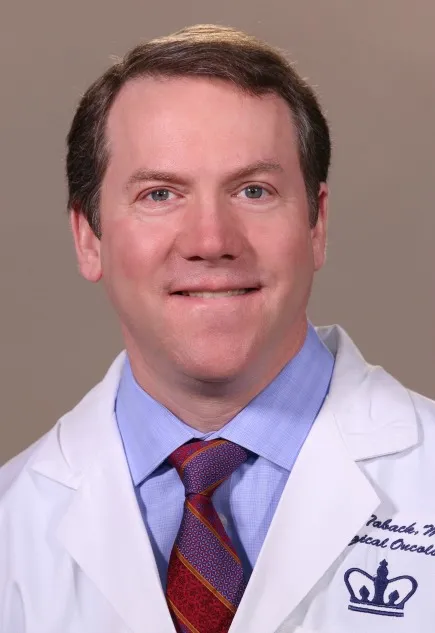
An oncological surgeon is a doctor who specializes in the surgical treatment of cancer. They are responsible for performing surgical biopsies, as well as for conducting any surgical procedures to remove tumors or treat cancerous areas.
Dermatologists
A dermatologist is a doctor who specializes in the diagnosis and treatment of conditions related to the skin, scalp, nails, and mucous membrane. They do the initial examination for any moles, lesions, or other suspicious marks that may be a sign of melanoma. They’ll likely be one of the first doctors you see.

Medical Oncologists
An oncologist is a doctor who specializes in the diagnosis and treatment of cancer. They help determine if the melanoma has spread beyond the skin to the lymph nodes or other organs. If it has, they will create a treatment plan and continually follow up to monitor its effectiveness.
Other Specialists We Work With
- Dermatopathologist: A dermatopathologist is a doctor who specializes in the study of skin diseases at a microscopic level. They can confirm the diagnosis of a dermatologist by looking at a sample of skin that was taken during a biopsy.
- Radiation Oncologist: A radiation oncologist is a doctor who specializes in using radiation treatments to reduce and remove cancerous growths. They are responsible for examining the patient to determine the proper dose of radiation, and will work closely with the dosimetrist to create a plan to deliver the radiation safely and effectively.
Our Location

Washington Heights-NYP/Columbia University Irving Medical Center (Main Campus)
161 Fort Washington Avenue, New York
New York, NY 10032
DID YOU FIND WHAT YOU WERE LOOKING FOR?

Have ideas about how we can improve our site? Take a 1-minute survey.
We recommend the following resources to continue learning about melanoma.
Keep Exploring