
Key Takeaways
- Many ovarian cancers may begin in the fallopian tubes, making removing the fallopian tubes (salpingectomy) a meaningful prevention strategy.
- When added to an abdominal or pelvic surgery already underway, the procedure generally adds little risk or recovery time.
- Removing the tubes preserves the ovaries and their hormonal function, but permanently eliminates natural conception and requires thoughtful counseling.
-
The greatest barriers are often systemic, including insurance, consent rules, surgical privileges, scheduling, and equitable access.
A Q&A with chief of general surgery, Katherine Fischkoff, MD, and gynecologic oncologist Alexandre Buckley de Meritens, MD, on the work of bringing ovarian cancer prevention into more operating rooms.
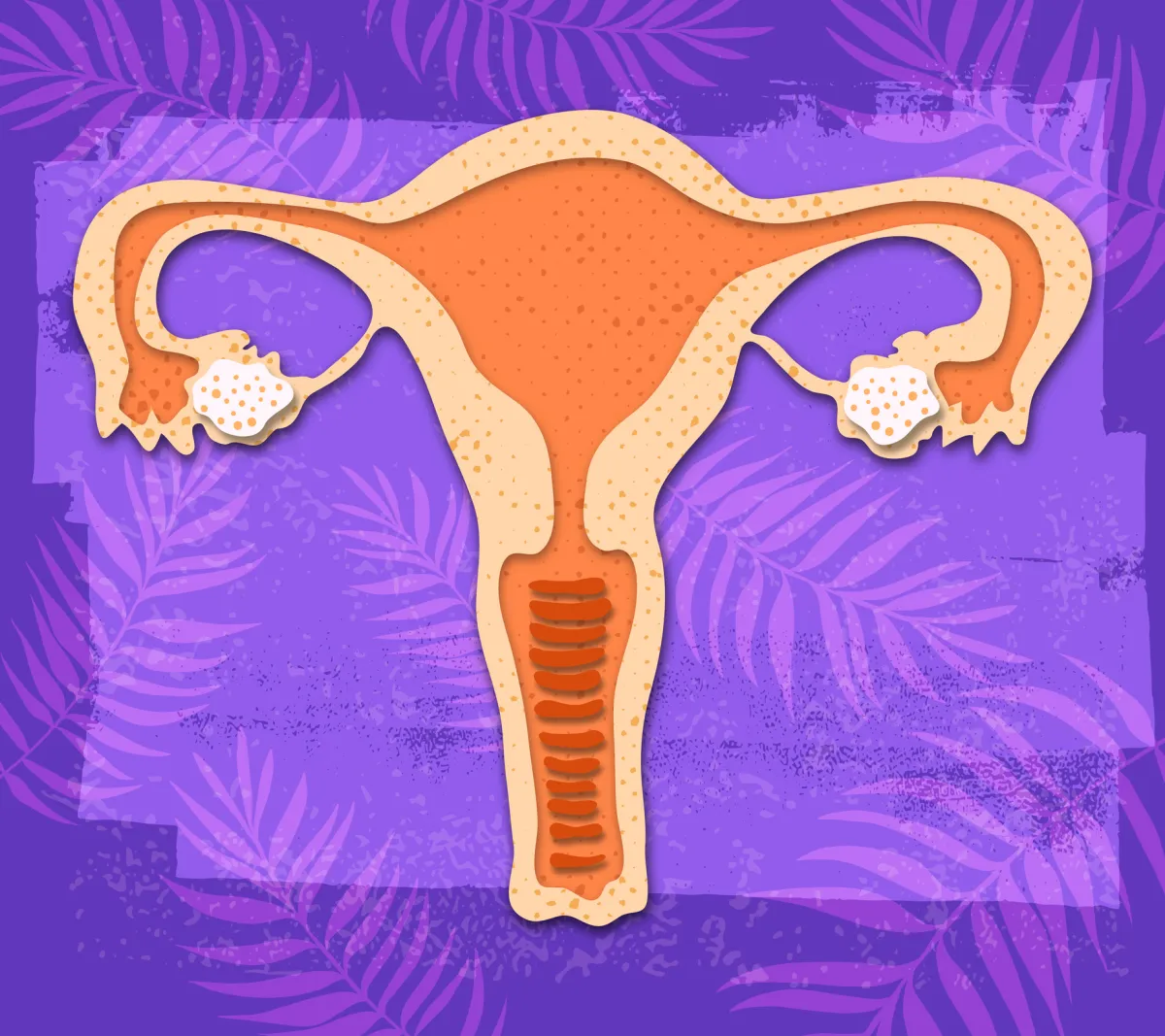
“Opportunistic salpingectomy” is not a phrase built for public understanding. As Dr. Fischkoff puts it, “It is a rough name.” But the idea behind it is direct—if a patient is already having abdominal or pelvic surgery and no longer wants future fertility through natural conception, removing the fallopian tubes [a salpingectomy, in medical terms] may meaningfully reduce the risk of ovarian cancer without removing the ovaries, by more than 70 percent.
Ovarian cancer remains difficult to screen for and catch early. It’s usually diagnosed after it has already spread. For Dr. Fischkoff and Dr. Buckley de Meritens, the question is how to make it practical, ethical, accessible, and easy for patients to understand.
The Fallopian Tubes Matter More Than Once Thought
What led you to explore surgical methods for prevention of ovarian cancer?
Dr. Fischkoff: The short version is that ovarian cancer is relatively rare, but not so rare that it is abstract. The problem is that the mortality rate is very high. So many women, when they first come in, it’s already spread beyond the ovaries. It’s all over the belly.
The reason this has changed how we think about prevention is that many cancers we call ovarian cancer may not begin in the ovary at all. It looks like ovarian cancer because it’s sitting on the ovaries, but in fact the abnormal cells originated in the tubes themselves.
That is why the fallopian tubes have become so central. In breast cancer or colon cancer, the field has screening tools that can detect early disease or precancerous change. Mammograms can pick up calcifications; colonoscopies can find polyps. Ovarian cancer does not have an equivalent screening test. It’s not clear what you would actually see. You can’t see cells.
Dr. Buckley de Meritens: There is no good screening tool to prevent ovarian cancer. Ultrasound and CA-125 [a blood test] may be used in certain high-risk patients when they are not yet ready for prophylactic surgery, but they have not shown the kind of survival impact that mammography has for breast cancer. With ovarian cancer, doing ultrasounds will not allow you to do that, because most of the time you will still find advanced disease.
How strong is the evidence that removing the tubes reduces risk?
Dr. Fischkoff: Registry studies have suggested a major reduction in risk. If you take out one tube, you drop the rate by like 35%. And if you take out two tubes, you drop the rate by about 70%.
Dr. Buckley de Meritens: To demonstrate the benefit, you need a huge database. There’s data that suggests the benefit, but it’s not strong, strong scientific data. There are prospective studies ongoing, including in Britain, but this is hard research because the disease is uncommon and the outcome takes time to measure.
From Gynecologic Surgery to General Surgery
Where did this begin clinically?
Dr. Fischkoff: Gynecologists have been doing this for years. When a patient is already undergoing gynecologic surgery, such as a hysterectomy for bleeding or fibroids, the ovaries may be left in place for hormonal reasons while the tubes are removed for cancer prevention. The same shift has happened for permanent contraception.
Dr. Buckley de Meritens: In obstetrics and gyn, we’re doing them when we’re doing surgery for other reasons. Patients that have their C-section, for example, if they want their tubes tied, now we don’t tie tubes, we remove them.
If someone wants permanent contraception, there is rarely a reason now to do an older tubal ligation technique instead of salpingectomy. I think it’s pretty well accepted that you’ll do a salpingectomy.
Dr. Fischkoff: The operation is basically the same. It’s the same incisions, the same general anesthesia. So from the patient point of view, it’s the same.
What changes when you try to bring this into general surgery?
Dr. Fischkoff: That is where the “opportunistic” part becomes important. If a patient is having an appendectomy, gallbladder surgery, hernia repair, bariatric surgery, colon surgery, or another abdominal operation, the fallopian tubes may be accessible. You’re there, you may as well, in the same way, take out the tubes.
But that simple idea runs into complications because most general surgeons do not have privileges to do salpingectomy. So even though it’s like a 12-second operation, I’m not actually allowed to do it, because it’s not part of my scope of practice.
There is also the counseling piece. In surveys of surgeons and gynecologists, they were largely supportive of the concept, but many were uncomfortable being the person to counsel patients about sterility, permanence, potential future regret, all that. It’s not about taking the tubes out.
How does your collaboration work with that in mind?
Dr. Fischkoff: For now, that means two surgeons, two schedules, additional consents, insurance questions, and all that coordination. We’ve been working together to identify eligible patients, how to introduce the option, and how to make the clinical workflow smoother.
Who Should Be Offered It
When do you start talking to patients about this?
Dr. Fischkoff: At Columbia, the team has started screening surgical clinics for patients who may be candidates, particularly women around age 35 and older who are already planning abdominal or pelvic surgery. Anybody who’s going to need abdominal surgery or pelvic surgery for something.
The question is how to do that without making the conversation feel jarring. A patient may come in expecting to discuss gallbladder surgery, so how do you make that transition and how do you get traction? The goal is to introduce the idea clearly, give patients time to think, and connect them with the gynecologic team for consent and counseling.
Does it make sense to take someone to the operating room only for salpingectomy?
Dr. Fischkoff: For the average-risk population, probably not. The risk-benefit and cost-benefit equation changes when general anesthesia and an entire operation are being done solely for prevention.
That is different from patients at high genetic risk, like those with BRCA mutations, where risk-reducing surgery has long been part of care. It is also different from the patient already having surgery for another reason. There’s our prevention opening, adding a small cancer-risk-reduction step to an operation already happening.
Is there an upper or lower age limit?
Dr. Fischkoff: There is still active discussion. The team has discussed patients roughly in the 35-to-65 age range because they are old enough for the conversation to be more relevant, but young enough that there may still be meaningful time for risk reduction. After about age 65, there’s probably no real value to taking out the tubes at that point anymore.
Dr. Buckley de Meritens: We still have probably the end of a very male chauvinistic and paternalistic way of practicing medicine, where procedures were not offered because of concern over regret rather than respect for autonomy.
Regret has been studied and may be higher in younger patients, particularly before age 30. But for patients who are clear about their decision, clinician discomfort shouldn’t override patient autonomy if they want them out.
What Patients Need to Understand
How do you talk about fertility?
Dr. Buckley de Meritens: Removing the tubes definitely pushes the patient into the infertility world. They won’t be able to continuously get there anymore, but as long as they have ovaries, through IVF, they could get pregnant.
Egg retrieval does not require the fallopian tubes. It doesn’t matter at all.
What about hormones and menopause?
Dr. Buckley de Meritens: The important distinction is between removing the tubes and removing the ovaries. In premenopausal patients without a strong indication, removing the ovaries is detrimental for their health. There’s an increased risk of dementia, cardiovascular disease, osteoporosis, and dyslipidemia.
Something that is hard to measure is the quality-of-life impact on removing the ovaries. Many patients, even after menopause, once you remove the ovaries, you do see the change. They do feel it.
Removing the tubes is different. It preserves the ovaries and is not expected to have the same hormonal consequences. It is not known really if it impacts the timing of menopause. I would not be surprised if it did shorten a little bit, or make menopause come a little earlier. But we don’t know.
Does adding salpingectomy change recovery?
Dr. Fischkoff: It really doesn’t change the recovery period. Most of the operations in this context are already either laparoscopic or robotic, and the salpingectomy piece is a pretty small piece of whatever you’re tacking it onto.
But there are exceptions, if a patient has extensive scar tissue or prior abdominal operations and we get there and we can’t get to the tube safely, we’ll leave it alone. But that I think is pretty rare.
Dr. Buckley de Meritens: I think patients are surprised sometimes when we tell them it’s not going to add anything to your recovery. That is a very low-risk procedure.
The Barriers Are Not Only Surgical
What are the biggest barriers right now?
Dr. Fischkoff: Because salpingectomy is considered sterilization, some patients, including on Medicaid, face a 30-day waiting period. That creates an obvious problem when the opportunity is an operation that cannot or should not wait. If somebody has really symptomatic gallstones, for example, and you say you want to take out their tubes, can you wait another month? Some people will just say, you know what, let’s not. I’ll just do it now.
Insurance can be complicated. Salpingectomy may be covered for sterilization, but coverage for risk reduction is much less straightforward. If a patient comes in with appendicitis, the appendectomy does not require prior authorization, but adding a preventive procedure may raise reimbursement and coverage questions.
How do patients respond when they hear about it?
Dr. Fischkoff: People have been all for it. They were like, ‘take them. I know I’m done. You don’t have to ask me twice. They’re yours.’
Dr. Buckley de Meritens: When they get to me, they’re all in. They’re like, ‘Yeah, just take them out.’ Most of the questions are about hormones, fertility, recovery, those things.
The important part is that informed consent should not become a disguised form of gatekeeping.
The Importance of Prevention
If ovarian cancer is relatively rare, why does this prevention opportunity matter so much?
Dr. Buckley de Meritens: Even though it’s a rare disease, the impact of prevention or preventing the disease is so big. Because it is often advanced at diagnosis, treatment can be extensive, including removal of the tubes, ovaries, and uterus, lymph node evaluation, chemotherapy, and even laparotomy.
Dr. Fischkoff: Even though it’s relatively rare, for something that’s so easy to do, that’s where the value comes in.
What needs to happen next?
Dr. Fischkoff: The next step is building the systems that make it easier to offer appropriately. That means educating patients before they are in an emergency room, helping primary care physicians and surgeons know when to raise the topic, clarifying coverage and consent requirements, and reducing the scheduling burden of having two surgeons involved.
Research funding can be hard to secure because grant reviewers may see the prevention logic as already established. They’ve said, you already know it’s the right thing to do, just do it. But the unanswered questions are important: How should patients be approached? Which surgical populations are best suited? How does the conversation change in urgent versus elective care? How can the process become equitable?
The moment is already here for cancer prevention; we just need to build a system that lets patients act on it.
Related:
- Everything You Need to Know About Mammograms
- State of the Union: General and Acute Care Surgery Today
- How Do You Know When Abdominal Pain Is Appendicitis?
Subscribe to Healthpoints and never miss an update.