
Two complementary research initiatives address valve failure across a congenital heart patient’s lifetime, reducing the burden of repeated open-heart surgeries
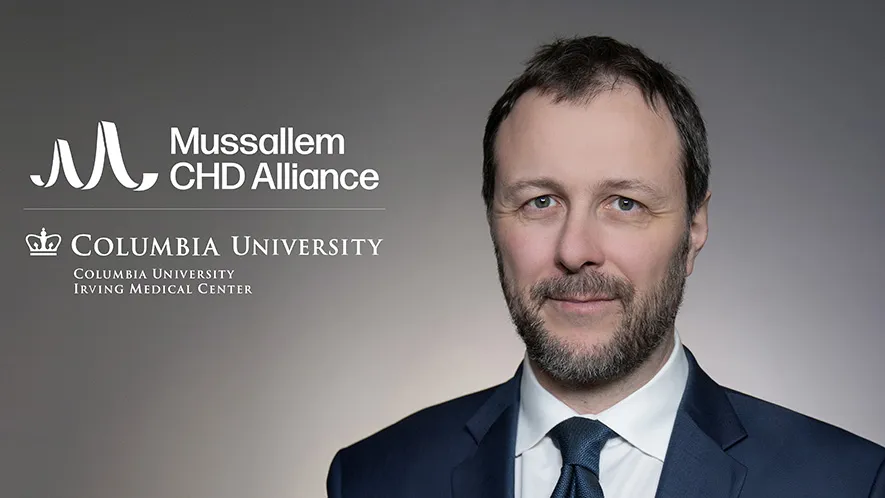
The Mussallem CHD Alliance (MCA) today announced its support for two translational research programs at Columbia University Vagelos College of Physicians and Surgeons led by Dr. Giovanni Ferrari, Vice Chair for Research in the Department of Surgery at Columbia and Co-Director of the Columbia Surgical Cardiovascular Research Institute, to address a critical unmet need in congenital heart defect (CHD) care: the limited durability of heart valves in patients from childhood to adulthood.
More than 40 percent of children with CHD will require subsequent valve replacement or conduit reconstruction during their lifetimes. By investing in both biologic and biomaterial innovation at Columbia, MCA aims to expand the range of durable options available to these patients and their care teams.
“Many children born with CHD require valve replacements early in life, yet current options are not designed for growing patients,” said Orin Herskowitz, President of the Mussallem CHD Alliance. “This means a pediatric CHD patient could be facing repeated open heart surgeries across childhood and into adulthood. Columbia is working on developing durable, growth-compatible valve technologies with the potential to change the trajectory for children with congenital heart defects. For patients, this will mean less time worrying about and recovering from procedures, and more time to thrive.”
The Mussallem CHD Alliance is supporting two complementary efforts at Columbia that address heart valve needs across a patient’s lifetime:
The first is the development of the SAVE (Scaffold-Assisted Valve Evaluation) device, a platform designed to preserve and functionally test living donor heart valves before implantation. Living donor valves have the potential to grow with the patient, offering a fundamentally different approach to valve replacement in children.
The second initiative focuses on engineering next-generation biomaterial for reconstructive heart surgery. These materials are designed to withstand the biological conditions in children’s blood that cause implanted valves to fail prematurely, providing durable performance across the patient’s lifespan.
Together, these programs represent a coordinated strategy to tackle valve failure from childhood through adulthood using both living tissue and engineered biomaterials.
“Our goal is to fundamentally rethink how we approach valve replacement and reconstruction for children with congenital heart defects, with approaches that address the full continuum of care from childhood through adulthood,” said Dr. Giovanni Ferrari, Principal Investigator and associate professor of surgical sciences at Columbia University.
“Columbia has been at the forefront of pediatric cardiac innovation, and this research represents the next frontier in our commitment to children with congenital heart defects,” said Dr. Emile A. Bacha, Chair of the Department of Surgery and Roth Salzhauer Family Professor of Surgery at Columbia University Vagelos College of Physicians and Surgeons and Surgeon-in-Chief for NewYork-Presbyterian/Columbia University Irving Medical Center. “Dr. Ferrari’s work on living valve preservation and biomaterial engineering has the potential to transform how we care for these patients, giving them not just more years, but better years with fewer interventions and greater freedom to live full lives.”
# # #
About the Mussallem CHD Alliance
The Mussallem CHD Alliance is the flagship initiative of the Linda and Mike Mussallem Foundation dedicated to helping people born with congenital heart defects (CHD) survive and thrive, from their first heartbeat onward.