
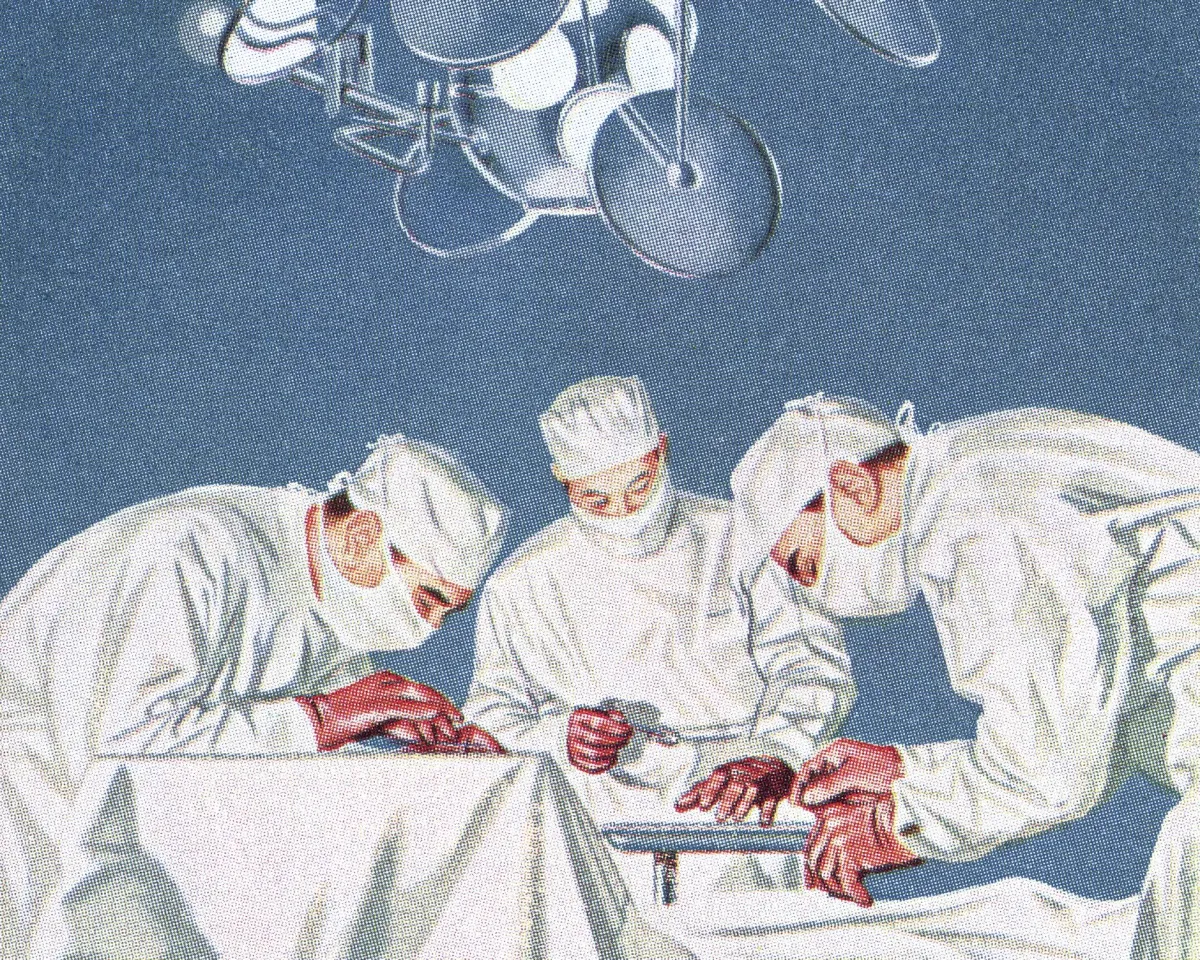
Like fashion itself, what doctors and nurses wear has always been about more than clothing. It has signaled authority and humility, cleanliness and care, science and symbolism. Across centuries, medical garb has evolved alongside medicine itself—shaped by faith, war, epidemics, and innovation.
Long before hospitals as we know them existed, caregiving often took place in religious institutions. Early nursing uniforms were modeled directly after nuns’ habits: long dark tunics, veils, and simple silhouettes that covered nearly the entire body. These garments were not designed with hygiene in mind; they represented humility, service, and a rejection of material comfort. Nursing was spiritual work, and the uniform reflected that devotion.
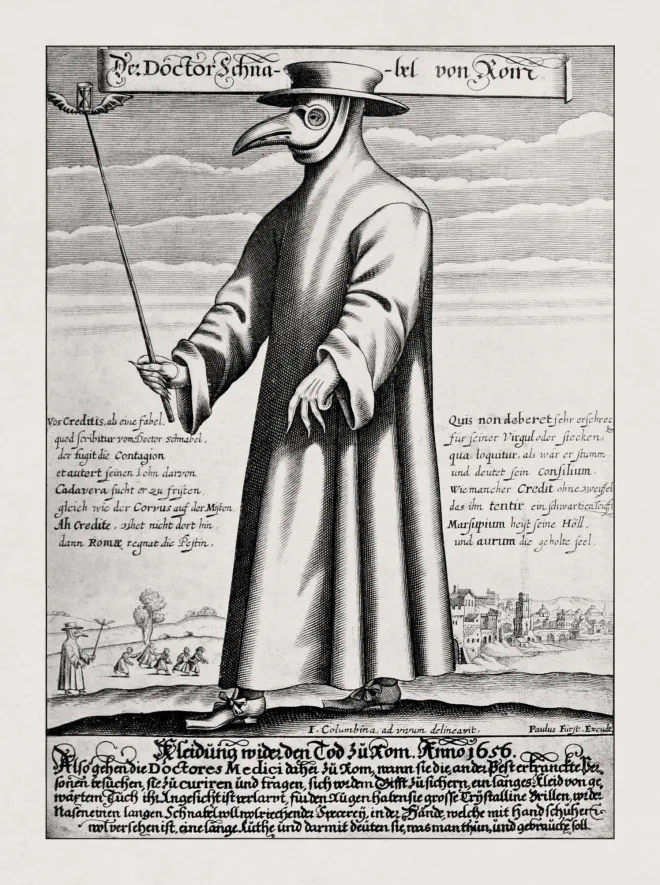
Physicians, meanwhile, dressed quite differently. In the early modern period, doctors treating plague patients wore what has become one of history’s most enduring medical images: the beaked “plague doctor” costume.
The Shift Toward Proof
Developed by French physician Charles de Lorme in the late 15th century, the outfit included a thick leather coat, gloves, boots, and trousers sealed with wax to repel bodily fluids. The elongated mask held herbs and spices meant to purify the air and protect against “miasma,” or the noxious vapors once believed to carry disease. It looks theatrical now, but it was an early attempt at what we now know as personal protective equipment (PPE).
By the 18th and early 19th centuries, surgeons and physicians had adopted dark wool frock coats, often black or navy, worn both inside and outside the operating room. These coats were symbols of professionalism and social status, and an effort to distinguish trained physicians from barber-surgeons and so-called quacks. They were also notoriously stained during procedures, earning the grim nickname “blood and pus-soaked” coats.
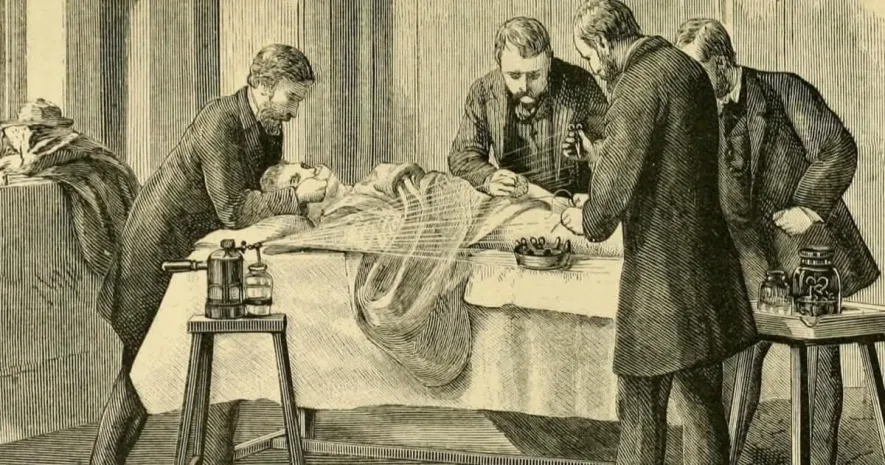
At the time, surgery was performed without anesthesia or antisepsis. Infection was incredibly common and mortality was high. Clothing mirrored this reality, offering little protection to patients or providers until the latter half of the 19th century, when attitudes toward medical uniforms started to shift.
When Protection Became Practice
Florence Nightingale’s work during the Crimean War—and her founding of the Nightingale School of Nursing in London in 1860—marked a turning point. She insisted on practical, secular uniforms for nurses: no crinolines (structured hoop skirts or petticoats), no elaborate accessories, nothing that restricted movement or disrupted calm. Finally, religious symbolism faded and function began to matter.
Around the same time, medicine itself was undergoing a profound transformation. Germ theory took hold, allowing surgical techniques to advance. Rapidly enough, hygiene and sanitation became central to care.
White coats replaced dark frock coats, signaling cleanliness and scientific rigor. Sterile gowns and masks entered operating theaters. In 1889, surgeon William Stewart Halsted introduced rubber gloves, originally to protect a nurse’s hands from harsh antiseptics, but soon recognized as a critical infection-control measure.
The days of cosmetic alterations were over. These changes reflected a new understanding of how disease spreads and how lives could be saved. By the early 20th century, surgical attire had become ritualized: scrubbing in, donning sterile gowns, masking up. World War I and the 1918 influenza pandemic further normalized protective equipment and the symbolic had rather officially become the essential.
Seeing Clearly, Working Longer
Then came the color shift. All-white operating rooms, flooded with bright light, caused eye strain and visual fatigue. By the 1960s and 70s, green and blue surgical clothing became standard, offering better contrast against blood and tissue and helping surgeons maintain visual focus during long procedures. These garments evolved into what we now call scrubs—simple, unisex uniforms designed for ease of movement, laundering, and sterilization.

Today’s scrubs are practical by design, with short-sleeved tops, drawstring pants, and breathable fabrics. They’re worn by surgeons, nurses, anesthesiologists, and countless members of the care team. Colored tunics may indicate role or specialty and vary from hospital to hospital. Caps always hold hair in place, and we all know that masks protect patients and providers alike.
A Uniform, and a Signal
Meanwhile, the white coat—once a universal symbol of medicine—has become more of a personal preference. Some clinicians still wear it proudly, citing the trust and reassurance it brings patients. Others have moved away from it; maybe they don’t like the formality or are concerned about the anxiety it can evoke in some. In psychiatry and other specialties, everyday clothing is sometimes preferred to help build rapport.
As the winds of fashion change, so does medical dress continue to evolve with practice.
Think back on the COVID-19 pandemic. In 2020, the world watched clinicians return to something eerily reminiscent of plague-era protection. Modern PPE, N95 masks, face shields, goggles, gowns, and gloves formed a layered barrier between healthcare workers and a highly contagious virus. The resemblance to de Lorme’s leather costume was striking. Once again, medicine met crisis with innovation, adaptation, and resilience. This time, concepts of protection had grounding in science, not superstition.

What’s remarkable is how much meaning these garments still carry. Uniforms confer identity; they inspire confidence. They remind clinicians who they are and why they’re there. As patients, they can signal safety in moments of vulnerability. For those who wear them, they represent belonging to a profession, a team, a lineage of care that stretches back centuries.
Medical clothing reflects our evolving understanding of the body, how we respond to disease and the commitment to healing. From religious habits to rubber gloves, from frock coats to scrubs, every change tells the story of medicine learning, again and again, how to better protect both patient and provider.
References:
Bates C. A cultural history of the nurses’ uniform. Gatineau, QC: Canadian Museum of Civilization Corporation; 2012.
Hardy S, Corones A. Dressed to heal: the changing semiotics of surgical dress. Fashion Theory. 2016;20(1):27-49. doi:10.1080/1362704X.2015.1077653
Science Museum Group. Surgeons and surgical spaces. https://www.sciencemuseum.org.uk/objects-and-stories/medicine/surgeons-and-surgical-spaces
Isaac S. Frock coats to scrubs: a story of surgical attire. Royal College of Surgeons of England Library Blog. Published October 19, 2020. https://www.rcseng.ac.uk/library-and-publications/library/blog/frock-coats-to-scrubs/
Wall BM. History of hospitals. University of Pennsylvania School of Nursing, Barbara Bates Center for the Study of the History of Nursing. https://www.nursing.upenn.edu/nhhc/nurses-institutions-caring/history-of-hospitals/
O’Donnell VR, Chinelatto LA, Rodrigues C, Hojaij FC. A brief history of medical uniforms: from ancient history to the COVID-19 time. Rev Col Bras Cir. 2020;47:e20202597. doi:10.1590/0100-6991e-20202597
Related:
- What Does a Perfusionist Do?
- Surgery Wrapped 2025: What a Year of Care Looked Like
- Frankenstein and the Electricity of the Heart