
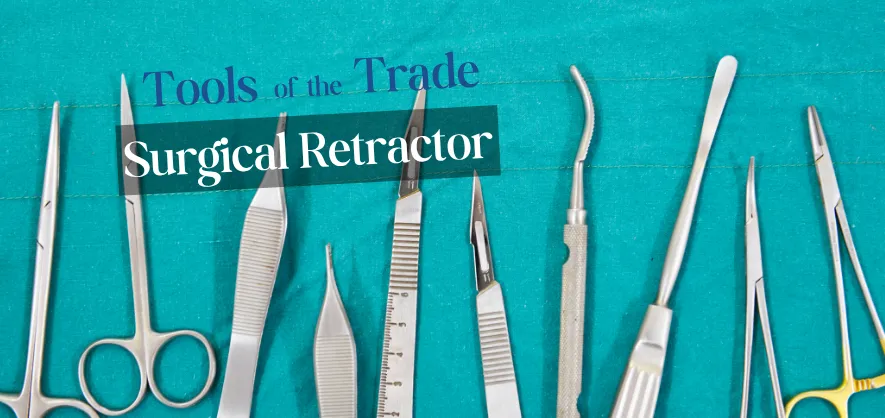
Most people understand that surgery requires specialized equipment, but if they had to name any of it, many would stop at “scalpel.” It takes a fascinating mix of simple tools and advanced equipment to keep patients safe, and most patients never get to see any of them. In our Tools of the Trade series, we’re exploring the essential instruments and technologies that make modern surgery so effective.
What Are Surgical Retractors?
A retractor is a surgical instrument used to gently hold back tissue, muscles, skin, or organs during a procedure. Retractors are commonly used in open surgeries, but may also be used in minimally invasive procedures.

What Are the Different Types of Surgical Retractors?
Retractors come in many shapes and sizes; some have smooth edges to protect delicate tissue, while others have small prongs or curved blades designed for specific anatomy. Different types of retractors include:
- Handheld retractors: These retractors are manually held by a surgeon or surgical assistant to move tissue aside during a procedure. Common examples include ribbon and rake retractors.
- Self-retaining retractors: These retractors lock into position and hold tissue apart without needing to be continuously held by hand. They are often used during longer or more complex procedures.
- Abdominal retractors: Larger retractors designed to provide access during surgeries involving the abdomen or chest.
- Skin retractors: Smaller retractors used to gently separate skin or superficial tissue near the surgical site.
- Minimally invasive retractors: Specialized retractors used in laparoscopic or robotic surgery through smaller incisions.
What Surgical Specialties Use a Retractor?
Retractors are widely used across procedures in many specialties, including:
- General surgery
- Orthopedic surgery
- Cardiothoracic surgery
- Neurosurgery
Related:
- Tools of the Trade: The Trocar
- What Does a Surgical Technologist Do?
- How to Talk to Kids About Surgery