
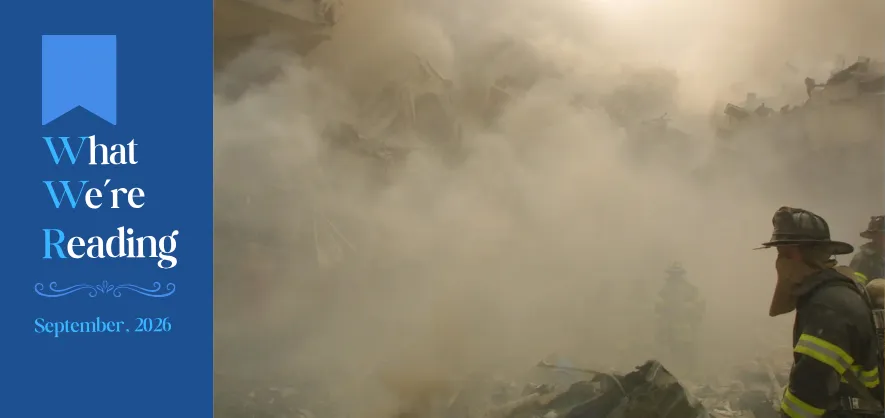
What to Know About the 9/11 Air Quality Documents
Twenty-five years after 9/11, the story of what happened that day is still being written in our bodies. This article does a thorough job of analyzing more than 170,000 pages of newly released city records suggesting New Yorkers were encouraged to return to Lower Manhattan while dangerous contaminants, including benzene and asbestos, were still being detected. Alongside Dr. Craig Smith’s reflection on that morning from inside Columbia, it’s a sobering reminder that the consequences of September 11 extend far beyond those events we witnessed in real time, and understanding what happened afterward remains part of remembering it. (nytimes.com)
Will A.I. Overwrite Our Sense of Shame?
This piece asks a question that feels increasingly difficult to dismiss: as AI becomes less a tool we consult and more a system we live alongside, whose ideas about right, wrong, acceptable, or shameful are we absorbing in return? Kang’s argument is less about machines developing a moral compass than about the relatively small group of people who helped shape theirs, and what happens when those values begin molding ours. It’s a fascinating read about AI, yes, but also about power, social norms, and those in power defining the boundaries for the rest of us. (newyorker.com)
Medicine Needs to Get Serious About AI
If the last article asks whose values AI may carry into the world, this one asks what happens when we begin trusting it with decisions that can change, or save, a life. Ezekiel Emanuel and Vinod Khosla make the deliberately provocative case that medicine should be willing to test autonomous AI, not simply keep it in a supporting role, pointing to early studies in which specialized models matched or outperformed physicians in areas ranging from diagnostic conversations to insulin management. Far from a settled argument, the authors acknowledge the need for much stronger real-world data, but also that medicine has an obligation to ask the harder questions. Where human judgment is indispensable, and our instinct to preserve it may itself deserve scrutiny. (theatlantic.com)
Related:
- For Us the Living: Reflections on 9/11 from Dr. Craig Smith
- What We're Reading: 08/07/26
- Does Tylenol During Pregnancy Cause Autism? Separating Fact from Fear