
Vaccine for Pancreatic Cancer Enters Phase II of Clinical Trial: Here’s What to Know
A vaccine designed not to prevent cancer, but to teach the immune system to recognize and attack a tumor already growing in the body. Better yet, one tailored to the unique mutations of each patient's cancer. Early studies have shown encouraging results, particularly in pancreatic cancer, where effective treatments remain urgently needed. Now, the National Institutes of Health is preparing a major public-private initiative to accelerate the development of personalized cancer vaccines, bringing together researchers, industry, and patients to explore what could become a new frontier in cancer treatment. (from nytimes.com)
The Evolution of the Human Brain Set It Up for Failure
What if the very qualities that make the human brain extraordinary are also what make it vulnerable to Alzheimer's disease? Unlike our closest primate relatives, humans develop the disease in ways that appear intimately connected to the evolution of our brains. Researchers are beginning to trace those connections, examining how the genetic changes and expanded brain regions that gave us complex thought, memory, and a sense of self may have introduced biological vulnerabilities along the way. Neurologist Adina Wise explores this fascinating evolutionary trade-off, and how understanding what made our brains uniquely human might also help us understand what causes them to deteriorate. (from theatlantic.com)
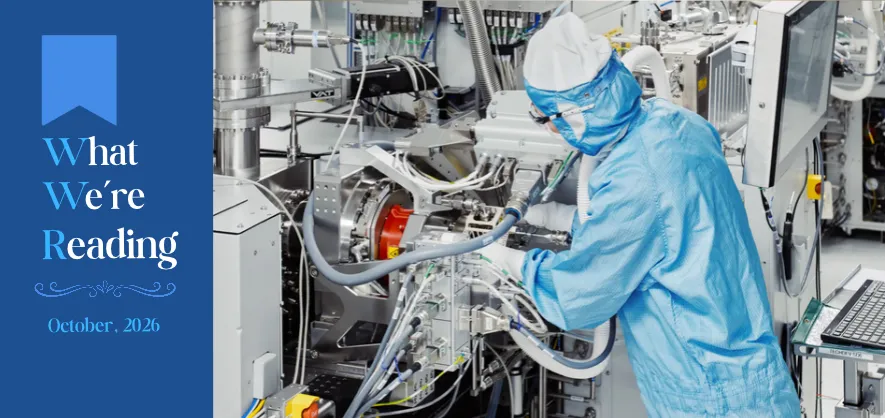
Computer Chips Are the Most Magnificent Things Humanity Has Ever Made
We tend to think of humanity's greatest achievements as things we can stand before in awe—the pyramids, the Great Wall, the moon landing. But what about something small enough to rest on a fingertip, yet so extraordinarily complex that no single person could build it, or even fully understand how it's made? This fantastic piece takes us inside the world of semiconductor manufacturing, tracing the decades of scientific ingenuity, painstaking craftsmanship, and international cooperation behind the chips that power nearly every aspect of modern life, from AI to lifesaving medical devices. Part technological history, part geopolitical examination, it's ultimately a meditation on human ambition and the astonishing things we can accomplish together, even when no one person can see the whole. (from newyorker.com)
Related:
- Vaccine for Pancreatic Cancer Enters Phase II of Clinical Trial: Here’s What to Know
- A Major Stride in Pancreatic Cancer Treatment: How Artificial Intelligence is Showing Major Promise in Early Detection
- Your Heart Has a Brain of Its Own