
When people think of surgical care, their minds often go straight to visions of gowned and gloved surgeons working in the OR. But much of the important work happens outside of the operating room, as patients prepare for their procedures ahead of time and recover afterward.
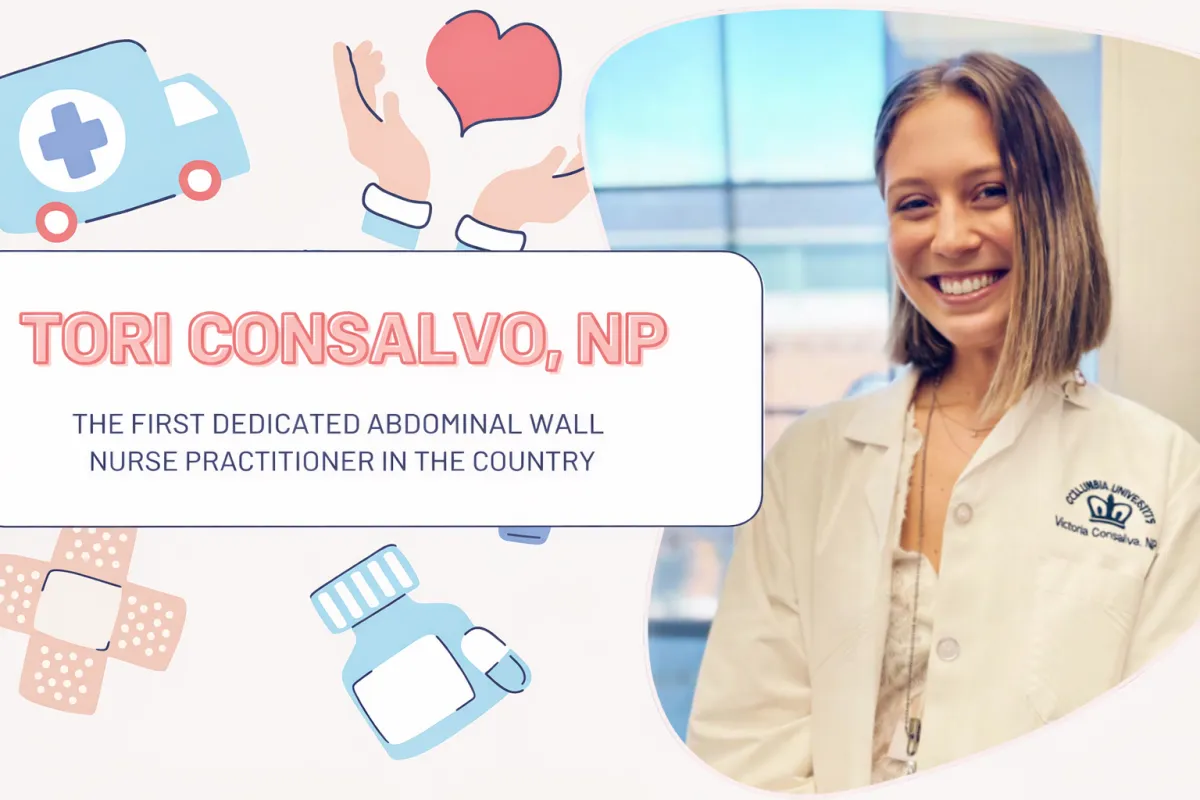
At the Columbia Hernia Center, nurse practitioner Tori Consalvo, NP, plays a key role in that process as the first NP in the country dedicated exclusively to abdominal wall surgery. We spoke with Consalvo about what that role looks like and how she works with patients across the course of their care.
Q: Tori, you have a pretty unique title. What does it mean to be an abdominal wall nurse practitioner?
It means my entire focus is on patients with hernias and complex abdominal wall conditions. I do not split my time between different specialties. Every patient I see is dealing with something related to the abdominal wall, whether that is preparing for hernia surgery, recovering from a complex reconstruction, or managing a chronic wound. This specialization allows me to develop real expertise in what these patients need.
Q: What does a typical day look like for you?
No two days are the same, which I love. I might start the morning seeing patients in clinic who are getting ready for surgery. Then I will check in on post-op patients, manage drain outputs, and assess wounds. In the afternoon, I could be counseling someone on preoperative weight loss or adjusting their GLP-1 medication. I also spend time answering patient calls and messages because questions always come up during recovery, and I want our patients to feel supported.
Q: You mentioned preoperative optimization. Can you explain what that involves?
Absolutely. For many patients, especially those with large or complex hernias, we cannot just schedule surgery right away. We need to get their bodies ready. That might mean helping them lose weight to reduce surgical risk and improve outcomes. It could involve optimizing diabetes control, addressing nutritional deficiencies, or helping someone quit smoking. I work closely with patients on these goals, sometimes for several months before surgery. It takes patience, but the results are worth it.
Q: Weight loss seems to be a big part of what you do. How do you approach that with patients?
I try to meet patients where they are. Losing weight is hard, and many of our patients have physical limitations because of their hernias that make exercise difficult. We use a combination of dietary counseling, behavioral strategies, and when appropriate, GLP-1 medications like semaglutide. These medications have been a game changer for patients who have struggled with weight loss in the past. I monitor their progress closely and adjust the plan as needed. The goal is sustainable weight loss that improves their surgical outcome and long-term health.
Q: What about after surgery? What is your role in postoperative care?
Post-op care is really where I spend a lot of my energy. After complex abdominal wall surgery, patients often go home with drains, specific wound care instructions, and activity restrictions. I see them frequently in those early weeks to monitor healing, manage drains, and catch any issues early. Patients can also reach out to me directly if something concerns them. Having that accessibility makes a big difference. People recover better when they are not anxious about whether something is normal.
Q: Drains seem to worry a lot of patients. What do you tell them?
Drains look intimidating, but they are actually your friend after surgery. They prevent fluid from collecting under your skin, which reduces the risk of complications like seromas. I teach every patient how to empty and measure their drains, and we track the output together. Once the drainage drops to a certain level, we remove them. Most patients are surprised by how quickly they get comfortable with drain care. And I am always just a phone call away if they have questions.
Q: What do you find most rewarding about this work?
Watching patients get their lives back. Many people come to us after living with a hernia for years. They have been told they are too high risk for surgery or that nothing can be done. When we are able to optimize them, get them through surgery safely, and see them return to activities they thought were behind them, that is incredibly fulfilling. I also love the relationships I build with patients. This is not a one-and-done interaction. I often work with people for months, and we go through a real journey together.
Q: Any advice for patients who are nervous about hernia surgery?
Ask questions. Lots of them. The more you understand about your surgery and recovery, the less anxious you will feel. Also, know that you are not alone in this process. At Columbia Hernia Center, you have a whole team supporting you. Dr. George and the surgical team are exceptional, and I am here to help you every step of the way. We genuinely care about our patients, and we are going to take good care of you.
In Need of Hernia Care?
If you are considering hernia surgery or have questions about your abdominal wall condition, Tori and the rest of our team are here to help. Call us at (212) 305-5947 or request an appointment online to get started.
Related:
- See our guide to abdonimal wall reconstruction
- The Truth About Hernia Mesh
- What Do I Buy for Hernia Surgery?