
On Page Nav:
On Page Nav:
You have scheduled your hernia surgery, and now you are wondering how to prepare. Finding the right surgeon was the hard part. Setting yourself up for a comfortable recovery? That is something you can control.
According to the team at the Columbia Hernia Center , who have helped thousands of patients through hernia surgery recovery, what makes the difference between a smooth healing process and an unnecessarily difficult one comes down to one thing: preparation.
Here is their advice on everything you need to know about getting ready for your surgery and creating the best environment for recovery.
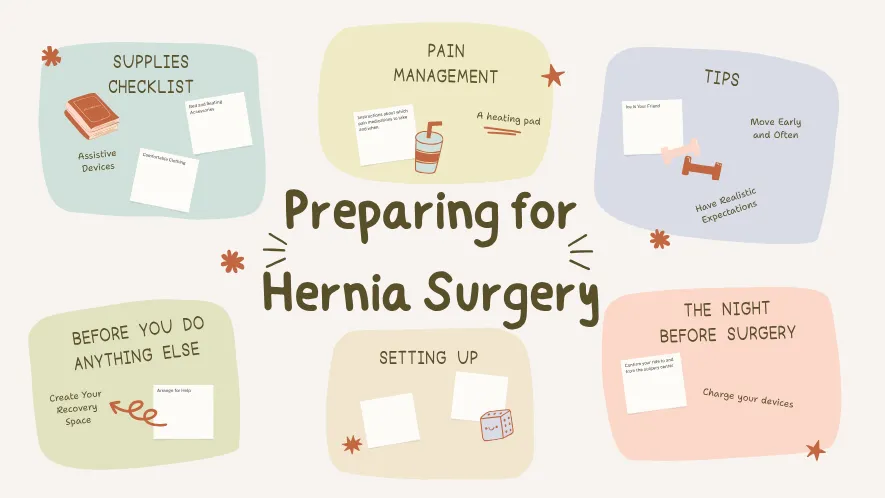
Before You Do Anything Else
Create Your Recovery Space
Your first priority is making sure you have a comfortable place to recover. For the first few days, you will spend most of your time resting, so think about where that will happen.
Choose a spot where you can lie down comfortably with easy access to a bathroom. Many patients find that a recliner is more comfortable than a bed initially because it allows them to elevate their upper body without stacking pillows.
Make sure you have everything you need within arm's reach: phone charger, remote control, medications, water bottle, and any entertainment you want. You will not want to get up repeatedly in those first few days.
Arrange for Help
You should not plan to be alone for the first 24 to 48 hours after surgery. Even if you feel fine, having someone nearby provides peace of mind and practical assistance.
That helper can drive you home from surgery, pick up prescriptions, prepare simple meals, and assist you if needed. After the first couple of days, most patients manage independently, but that initial support makes a real difference.
The Essential Supplies Checklist
Comfortable Clothing
Loose fitting, soft clothing is essential. Anything that puts pressure on your abdomen or requires bending to put on will be uncomfortable.
What to get:
- Loose sweatpants or pajama pants with elastic waistbands
- Oversized t-shirts or button front shirts
- Underwear one size larger than usual (especially important for inguinal hernia repair)
- Slip on shoes or slippers so you do not have to bend to tie laces
Pro tip: If you are having inguinal (groin) hernia surgery, loose boxer shorts or briefs that do not bind are more comfortable than tight fitting underwear. However if you have a much larger inguinal hernia, your surgeon may recommend tighter fitting briefs to prevent fluid collection. Smaller hernias usually do not have this issue.
Bed and Seating Accessories
Getting comfortable while your abdomen heals requires some creativity with pillows and positioning.
What to get:
- Extra pillows for positioning and support
- A wedge pillow if you want to sleep slightly elevated
- A small pillow to hold against your abdomen when you cough or sneeze (this really helps)
Pro tip: Many patients find sleeping slightly propped up is more comfortable than lying flat for the first week or so.
Pain Management
Your surgeon will prescribe any necessary pain medications, but over the counter options are important too.
What to get:
- Acetaminophen (Tylenol)
- Ibuprofen (Advil, Motrin) if your surgeon says it is okay
- A heating pad for abdominal muscle soreness (useful after the first few days)
- Ice packs for the first 48 to 72 hours
Important: Always follow your surgeon's specific instructions about which pain medications to take and when. Some surgeons prefer patients avoid certain medications.
Medical Supplies
Your surgical team will send you home with initial wound care supplies, but having extras on hand prevents inconvenient trips to the pharmacy.
What to get:
- Sterile gauze pads
- Medical tape
- Antibacterial ointment
- Alcohol swabs
- Wound dressing if your surgeon recommends keeping incisions covered
Even if you do not need these for your surgery, you will have the start of a good first aid kit.
Abdominal Binder
For larger abdominal wall surgeries, your surgeon may recommend or provide an abdominal binder. This supportive wrap helps reduce swelling and provides comfort during healing.
What to consider:
- You may be sent home with a binder, but having a backup is helpful
- Make sure you know how to wear it properly (the nursing staff or your surgery team can show you)
- Not every hernia surgery requires a binder, so ask your surgeon
Assistive Devices
These items might seem unnecessary until you realize how much bending and straining is involved in everyday activities.
Raised toilet seat: Getting on and off the toilet requires using your abdominal muscles. A raised seat reduces how far you need to lower yourself, making bathroom trips much more comfortable.
Grabber tool: A long handled grabber lets you pick up items from the floor, reach things on high shelves, and retrieve dropped objects without bending or straining. This simple tool is surprisingly useful.
Step stool with handles: If you need to reach something high, a small step stool is safer than stretching or climbing, which can strain your repair.
Ice Packs and Heating Pads
Temperature therapy makes a real difference in comfort.
Ice packs: Use these for the first 48 to 72 hours to reduce swelling and numb discomfort. Gel packs that can be refrozen are most convenient.
Heating pads: After the initial swelling subsides, heat can help relax sore abdominal muscles and ease spasms. Do not use heat directly on incisions.
Entertainment
You will have time on your hands while recovering, and boredom can make discomfort feel worse.
What to prepare:
- Download movies or shows to watch
- Have books, magazines, or audiobooks ready
- Keep your phone and tablet charged with chargers nearby
- Consider a streaming service free trial if you do not already have one
Food and Hydration
Good nutrition and hydration support healing, but you probably will not feel like cooking.
What to stock:
- Easy to prepare foods like soup, crackers, and toast
- Pre cut fruits and vegetables
- Protein rich snacks (cheese, yogurt, nuts)
- Plenty of water and low sugar beverages
- A stool softener (constipation is common after surgery and straining is the last thing you want)
What to avoid: Carbonated drinks can cause bloating and discomfort, especially after laparoscopic surgery.
Paperwork and Information
Having important information easily accessible reduces stress.
Keep handy:
- Your post operative instructions
- Your surgeon's office phone number
- Pharmacy phone number
- Insurance information
- Emergency contact numbers
- List of current medications
Tips from Patients Who Have Been There
Start Your Stool Softener Early
Constipation after surgery is extremely common due to anesthesia, pain medications, and reduced activity. Straining on the toilet puts pressure on your repair and causes discomfort.
Start taking a stool softener the day of surgery and continue until you are off pain medications and moving normally. This simple step prevents a lot of misery.
Move Early and Often
As soon as you are cleared by your surgical team, start walking. Short, frequent walks are better than staying in bed. Movement helps prevent blood clots, reduces gas pain, improves bowel function, and actually speeds healing.
You are not training for a marathon. A slow walk around your home every few hours is exactly what your body needs.
Ice Is Your Friend
Many patients underutilize ice packs in the first few days. Using ice consistently (20 minutes on, 20 minutes off) significantly reduces swelling and discomfort.
Have Realistic Expectations
Recovery takes longer than most people expect. Even if you feel good after a few days, your body is still healing internally. Follow your surgeon's restrictions about lifting and activity even when you feel ready to do more.
Pushing too hard too soon can set back your recovery or cause complications.
The Night Before Surgery
- Stop eating and drinking at the time your surgeon specified
- Lay out comfortable clothes to wear home from surgery
- Charge your devices
- Confirm your ride to and from the surgery center
- Get a good night's sleep (easier said than done, but try)
Setting Yourself Up for Success
The patients who have the smoothest recoveries are the ones who prepare thoughtfully, follow instructions carefully, and give their bodies time to heal. Everything on this list serves one purpose: making your recovery as comfortable and uneventful as possible.
Take the time now to gather what you need. Future you will be grateful.
Related:
- Robotic Hernia Surgery: How It Works and Why It Matters
- The Truth About Hernia Mesh
- What Makes a Hernia Surgeon?
- Meet Tori Consalvo, NP, The First Dedicated Abdominal Wall Nurse Practitioner in the Country