
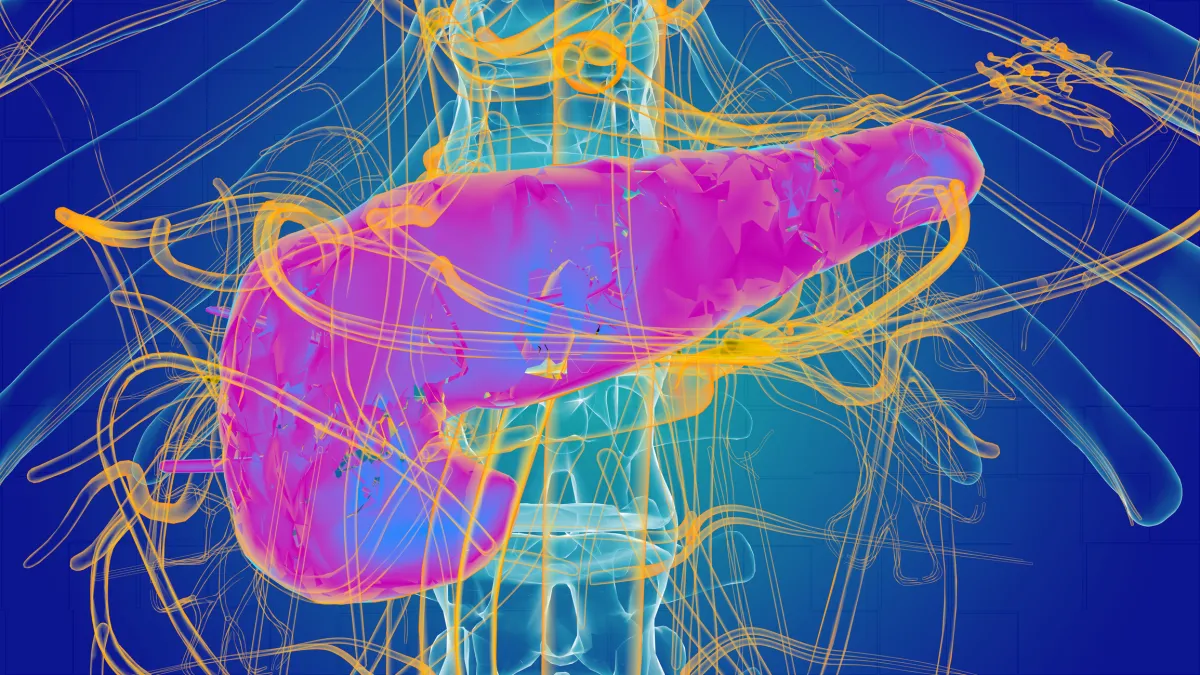
Seeking Out the Hardest Problems
When Kazuki Sugahara, MD, PhD, chose to specialize in pancreatic cancer, treatment options were few, and research funding was scarce.
Among oncologists and scientists, pancreatic cancer was not a priority — most of the field's energy was flowing toward breast cancer, colon cancer, the diseases that had already captured public imagination and political will. Dr. Sugahara saw an opening precisely there, in the neglect. "Because it was so bad," he recalls, "I felt that we could make a difference."
That instinct—to tackle the hardest problems rather than avoid them—has helped drive a series of breakthroughs that may reshape the future of pancreatic cancer treatment.
Detecting, Delivering, Destroying — The Cycle That Makes Pancreatic Cancer Hard To Treat
Other types of cancer prognoses have improved as a result of several factors.
First, the sooner a tumor is detected, the less time it has to grow or metastasize, making it easier to destroy. Second, targeted therapies allow drugs to reach the tumor. Third, those drugs become increasingly effective at destroying the tumor.
Pancreatic cancer has been elusive in each of these aspects. It is hard to detect. It is hard to reach. It is hard to destroy.
DETECTING — The symptoms of pancreatic cancer are subtle and only become apparent after significant disease progression. It also has early metastasis. “The disease starts spreading very early,” explains Dr. Sugahara, “much earlier than we think.”
DELIVERING – A lot of immunotherapies have been tested for pancreatic cancer, but none of them have worked really well. Immunotherapies are treatments that trigger the body’s immune system to attack the cancer cells. Pancreatic cancer has a “micro environment'' in which the body’s immune system cannot operate well, allowing the cancer cells to survive better.
“If you look into the tumor,” explains Dr. Sugahara, “you can see all sorts of different components within the tumor tissue. It starts, of course, with cancer cells. It also has blood vessel cells. It has what we call ‘stromal cells’ that fill in the gaps between the tumor cells.”
DESTROYING — The tumor is stiff, and very hard. One significant cause is that it has high levels of cytokines — chemicals inside the tumor — that make it produce a lot of proteins inside the tumor. As a result, every month of undetected disease makes the cancer more resistant to treatment
These three obstacles form a malignant cycle. The longer the tumor grows, the stiffer it becomes, the harder it becomes to treat, and the more likely it is to spread.
A Change In Momentum
About ten years ago, momentum began to build in studying pancreatic cancer. It was partly driven by the research world, but also by political initiatives — President Obama announced that there had to be a task force for pancreatic cancer because of its bad prognosis.
“It was definitely exciting,” Dr. Sugahara recalls, “All of a sudden pancreas cancer was a major research topic, and people started to understand that it's important to investigate this disease.”
A “Breakthrough” in Treatment
At the heart of Dr. Sugahara's research is a drug delivery system built around a peptide – a small piece of protein known as the IRGD peptide – that not only helps more of the drug reach into the dense, fortress-like tumor but also makes the tumor less stiff and therefore easier to destroy.
In other words, iRGD acts like a tumor-penetrating helper molecule. When a cancer drug – whether chemotherapy or immunotherapy is mixed in with and injected together with this IRGD molecule, Dr. Sugahara explains, “the peptide changes the structure of the tumor — makes it looser, better perfused, more oxygenated — and all that helps immune cells get into the tumor tissue and then get activated there.
It touches a switch in the blood vessel of tumors—only in tumors—and opens the gate right there. Now, the cancer drug can sort of leak into or penetrate into the tumor.
“So when we add immunotherapy on top of it,” he continues, “the therapy works better because the immune cells are more activated and more present in the deeper core of the tumor
The first clue that led to this discovery, Dr. Sugahara recounts, was “when we were checking tumor tissue treated with our peptide, [and] we felt the tumor looked a little odd — a little different in structure. For example, the blood vessels looked different, the immune cells were distributing in a different way. So that led us to a hypothesis that the peptide blocks an important signal in the tumor.
That hypothesis was indeed the case. The implications could be extremely promising.
Exponential Combinations
Today, Dr. Sugahara says, “A lot of people are looking for therapies that synergize with each other.”
Until now, combination therapies were blunt instruments — pair one cell-killing drug with another and hope for additive results. He explains, “The way people are doing it now is probably a little different than in the past, where you'd combine a drug that kills cells one way with another drug that kills them another way.
“It's more hypothesis-driven these days, because we now know a lot of mechanisms. So we can hypothesize that Treatment A works well with a totally unrelated Therapy B, because they have a common way of achieving things — and that way we can come up with unexpected combinations of therapies.”
This might even raise questions about earlier detection, for instance exploring whether the same technology using IRGD peptides may be useful to detect cancer in addition to treating cancer.
And of course, there will almost definitely be a growing role for Artificial Intelligence in both research and clinical settings.
“In our research, we use AI-based systems to analyze data. That's for sure, but in the clinical world, we already know or there are reports saying that AI can recognize a difference that people or pathologists cannot, which can predict the future onset of a disease.”
When it comes to synergizing therapies, “perhaps AI will help us ‘connect the dots,’” guesses Dr. Sugahara. “Probably in the near future it will help us identify two dots that we never knew were close to each other.”
Taking on the Challenge
Regardless of how exactly things progress, one thing is certain: pancreatic oncologists like Dr. Sugahara and his peers have always been and remain up for the challenge.
Thanks to that spirit, a disease that remains notoriously difficult to detect, hard to access, and stubborn to treat will someday become more easily detectable, simpler to target, and easier to destroy.
Further Reading:
- Pancreas Center | Best NY Program | Columbia Surgery NYP
- Pancreatic Cancer Care Program | Columbia Surgery
- Treating Pancreatic Tumors: Drug Delivery Systems & Pancreatic Cancer | Columbia Surgery
- Targeting the αvβ5 Integrin Modifies the TGF-β-Rich Tumor Microenvironment of Pancreatic Cancer - PubMed
- Enhancing Immunotherapeutic Response in Colorectal Cancer with a Neuropilin-1-Targeting Tumor Penetrating Peptide