
By Craig Smith, MD
Article first published on Dr. Smith's Substack, Long Incision.
For the Cardiothoracic and Vascular Trainee Symposium held at Columbia University Irving Medical Center on October 10, 2026, I was asked to present my thoughts “on sustaining academic scholarship in a busy surgical career” (title slide above) to an audience consisting primarily of residents who were at various points on their journey to become cardiovascular surgeons. Below is a reduction scriptoplasty with the ponderous presentation resected.
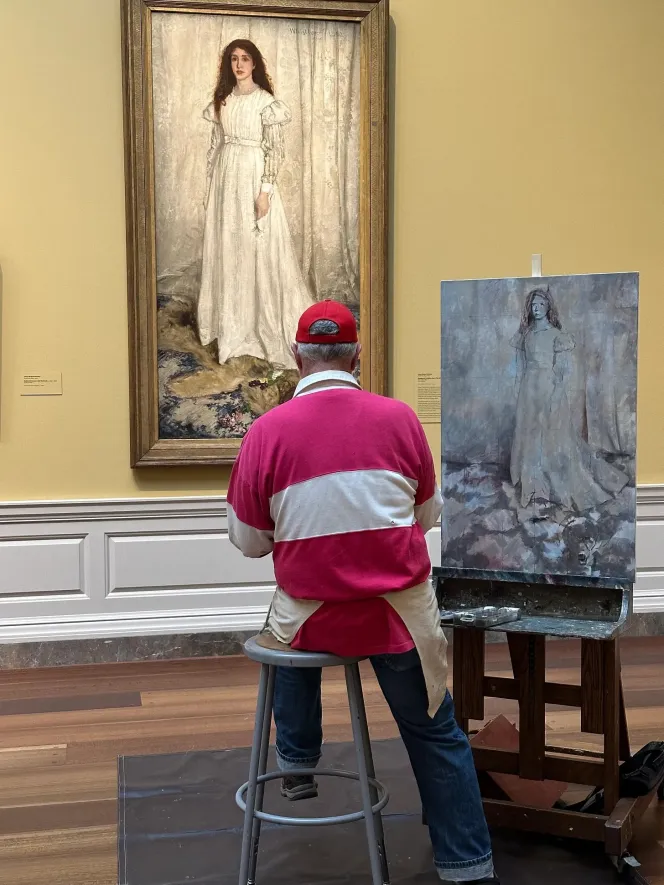
I took this photo in 2022 when this famous portrait was on loan from the Tait Modern in London to the National Gallery in Washington DC. Whistler’s subject was Joanna Hiffernan, his model, lover, and muse. I show you this NOT to imply that I’m some kind of immortal artist, but because I think you, my audience, are in a position something like the aspiring artist in pink—trying to figure out how to become Whistler, and bring a thing you love to life. My assignment is to offer some humble advice for your journey, based on experience accumulated by someone who has reached the end of his own journey.
I will break this down into three topics:
What is a "Busy Surgical Career?"
What constitutes "Academic Scholarship?"
How are both sustained?
An important disclaimer: You won’t find my advice very helpful if your first priority is to be a busy scientist overseeing a basic science lab supported by sustained NIH funding, and you expect to devote half or less of your time to clinical surgery. There is nothing wrong with setting your priorities that way. You can still be a great doctor, it’s just a different kind of greatness than what I’m promoting, and no more important than the difference between Shakespeare and Isaac Newton. My advice will be the most relevant if your first priority is to be a busy clinical surgeon—you love to operate, you have a reputation for technical skill and comprehensive patient care—but you are also driven to ask questions, find solutions, change practice, and share your contributions orally and in publications.
A codicil to my disclaimer: The kind of career I’m promoting was my goal when I was where you are, but it doesn’t have to be your goal. I can’t be sure my kind of career is even a good idea for anyone other than me. Or, maybe it was a good idea for some people in my generation, but not for younger generations. That’s a frequently-asked question that I can’t answer.
What is a busy surgical career?
High case volume
Referral draw
Recognition for a specific aspect of surgery
High case volume is the most obvious part of “busy,” and is characterized by volume in the upper percentiles of common registries, like STS, the New York State CSRS, or other regional examples. Outcomes are equally important, and you won’t stay in the upper percentiles with bad outcomes.
A busy surgeon tends to be known for treating an elite spectrum of cases, “elite” usually meaning those complex, difficult cases that not every surgeon is willing to take on. A less clinical, more socioeconomic sense of “elite” relates to referral draw, which I will discuss separately.
Is it possible to be too busy? While there might be individual exceptions, there is no data to suggest a volume threshold past which outcome quality declines. It is possible to be so busy clinically that success in academic scholarship becomes unattainable, but the “too busy” threshold is highly individualized and very hard to define. I would argue that the most successful people in any field are those who default to doing a little more of everything rather than doing a little less. If you doubt my premise, ask yourself what kind of person gets into medical school.
A surgeon with “referral draw” is one who is specifically and individually sought out by referring physicians to care for their patients (the “referral” part). The same surgeon may be sought by patients who’ve done their own investigating, although “referral” doesn’t apply as literally. “Draw” is represented by patient demographics and econometrics showing that such a surgeon treats patients from the region, the nation, and the world. That geographic spread reflects a kind of elective mobility that is often associated with higher socioeconomic status, and the remuneration from patients “drawn” tends to be higher than average. Put simply, a surgeon with referral draw operates on lots of patients from all over the place and brings in lots of money, for the surgeon and the system.
For an audience of highly sophisticated medical consumers like this one, here’s a 3-question quiz to illustrate “referral draw” from the consumer perspective:
Question #1: You have a clean, fresh 10cm laceration in your forearm with no neurovascular issues.
What do you do? Get yourself to The Pitt, to be closed by whoever is available and out of rehab. Referral draw isn’t important to the outcome.
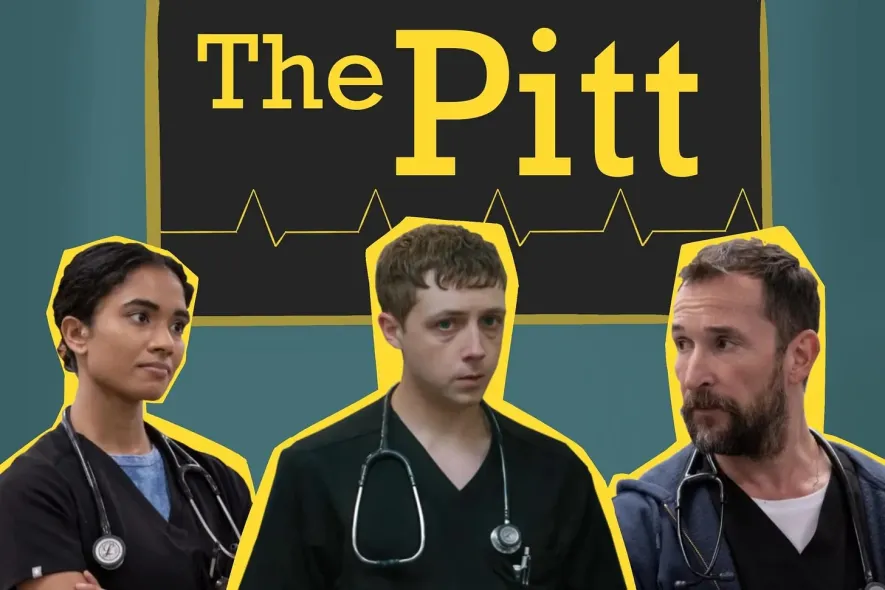
Question #2: Your 5-year-old daughter has a jagged 5cm facial laceration involving one nostril and crossing the vermillion border of her upper lip. You meet her in The Pitt, to which she was sent by ambulance from her school. Victoria Javadi, the precocious nepo-baby medical student, is ready and eager to close the laceration, assisted by Matteo, the hottie tech she’s hitting on.

What do you do? You find the best plastic surgeon east of the Mississippi; that surgeon is a referral draw.
Question #3: Your father is also in The Pitt, stable after an uncomplicated STEMI, and he needs an elective AVR/CABG(3). An Emergency Medicine attending, who isn’t among those lined up to jump off the roof, enthusiastically offers a CT surgeon who finished training 3 days ago, and can make room in the OR schedule anytime you want.

What do you do? Depends how you feel about your father, but odds are you’ll end up contacting a surgeon who draws referrals from all over the northeast.
A surgeon who is recognized for a specific aspect of surgery earns that recognition by having a high volume of cases reflecting that expertise, with excellent outcomes. A surgeon’s “elite” spectrum of cases, mentioned earlier, will usually reflect the same distinction. Markers of recognition include being an invited speaker, commentator, moderator, and author on that aspect of surgery. Sometimes the recognition includes having the surgeon’s name attached to a technique or device. Those dimensions of recognition mesh very naturally with academic scholarship.
What else constitutes “academic scholarship?” First, another important disclaimer: I have the luxury of focusing on the cool, high-altitude stuff like empowering creativity, and the impact and visibility of the academic product. I am NOT offering some of the entry-level advice that can be very important: What topics do you want to pursue, and with whom to guide you? How should you support your academic pursuits, with time and money? I can refer you to many excellent colleagues who can address those questions better than I.
What constitutes academic scholarship?
Innovation of some kind
Easy to say, but I know innovation is a very intimidating word. Too many people think it means creating cold fusion or discovering penicillin—how does a busy surgeon have time to do that? Quantum-leap innovations like those do occur, but they are very rare. Much more common are what I’ve called stealth innovations, which are concrete, constrained, and incremental. Constraint imposes discipline and spurs invention. Small, conceivable steps help match the innovator’s capabilities to the scale of solutions required. Incremental innovations add up over time and can lead to some surprising destinations, accounting for the fact that many of what I call stealth innovations aren’t even recognized as such until years later.
My favorite example of a medical stealth innovation is transesophageal echo (TEE), which started as in intriguing toy in the mid 1980s, capable of showing cardiac anatomy and function in real time with greater fidelity than anything before it. Not only did it become an important stand-alone diagnostic device, it made possible many things we do today. Think about all varieties of valve repair, especially mitral repair. Think about positioning of cannulas, catheters, evacuation of air, assessment of myocardial function, assessment of complex congenital reconstructions, and on and on. How do I know it was stealthy? There were no billboards in the early days proclaiming “Saint Dominatious Hospital First to Offer TEE!”
Innovate:
Be a source of ideas and a pursuer of solutions
Record your innovation in the body of knowledge
Encourage duplication or other kinds of validation
Nurture a reputation for objectivity
A busy surgeon can innovate in many ways, large and small. That surgeon’s academic scholarship depends primarily on being a source of ideas, and a pursuer of solutions. Surgeons have the great advantage of working in a high -stakes, highly constrained environment. For the right busy surgeon, one with a receptive mind and lots of curiosity, that is a fantastic goad to creativity. It starts there, but you must also record your innovations in the body of knowledge, by publishing, speaking, moderating, all the things I described as markers for recognition in a specific aspect of surgery. It is also important to nurture a reputation for objectivity with respect to your innovations and those of others. The simplest way to accomplish that is to share in your scholarship the good and the bad in your personal experience. Another way is to encourage duplication of findings and all other kinds of validation.
As my final message to you regarding academic scholarship, consider this statement from The Imitation Game:
"Sometimes it's the people no one imagines anything of who do the things that no one can imagine."
-Screenwriter Graham Moore, spoken by Turing's childhood friend
Think of “no one” as the larger world of academic medicine, dominated by MD/PhDs in what they like to call the “cognitive” specialties, for many of whom occasional clinical practice is an annoying obligation at best. Who are the colleagues they imagine nothing of? Surgeons, of course, those overpaid non-cognitive technicians who fancy they can also dabble in science. When operations throw you curve balls, use that crucible of creativity to do something hard to imagine.
The last part of my assignment is to explain how these things are sustained. As far as the “busy surgeon” part is concerned, busy tends to beget busy, and achieving the metrics of success outlined previously can be almost too self-sustaining, so that the problem becomes preserving enough balance for your curiosity and creativity to come into play. You should also take advantage of the mutually reinforcing nature of both parts of the equation; let the clinical gears mesh with the academic gears. Finally, keep popping ideas, funded or not. Funding is just fuel, you’re the spark!

Related:
- Long Incision: Prepare and Prevent
- Long Incision: What is Clinical Excellence?
- For Us the Living: Reflections on 9/11 from Dr. Craig Smith