
Guide to Parathyroid Cancer
Reviewed by the physicians of Columbia’s Parathyroid Surgery Team (February, 2026)
Parathyroid cancer is a rare type of cancer that affects the parathyroid glands—four tiny glands located in the neck that regulate calcium levels in the body. Unlike thyroid nodules, parathyroid cancer is uncommon but can lead to elevated blood calcium (hypercalcemia) and serious complications if not treated.
Because early symptoms can mimic those of other conditions, careful evaluation and expert surgical management are crucial.
Key Facts
- Parathyroid cancer is very rare, occurring in only 1 out of every 2 million people.
- It causes elevated parathyroid hormone (PTH) levels and severe hypercalcemia, which can lead to kidney stones, bone loss, fatigue, abdominal pain, and other complications.
- Surgery is the primary and most effective treatment, and early complete removal offers the best chance of cure.
What Causes Parathyroid Cancer?
The exact cause of parathyroid cancer is not fully understood, but there are some factors associated with its development:
- Genetic mutations: In some cases, parathyroid cancer is linked to inherited syndromes, such as hyperparathyroidism-jaw tumor syndrome (HPT-JT) or multiple endocrine neoplasia type 1 (MEN1).
- Radiation exposure: Previous radiation to the head or neck may increase risk.
- Long-standing hyperparathyroidism: Rarely, parathyroid overactivity may lead to cancer developing.
Unlike benign parathyroid adenomas, which are much more common, parathyroid cancer typically causes very high PTH levels and more severe hypercalcemia.
What Are the Symptoms of Parathyroid Cancer?
Many early symptoms of parathyroid cancer are related to excess calcium in the blood, rather than the tumor itself. Common symptoms include:
- Bone pain or frequent fractures (due to calcium being pulled from bones)
- Kidney stones, frequent urination, or kidney dysfunction
- Abdominal pain, nausea, vomiting, or constipation
- Fatigue, depression, or confusion
- Hoarseness or difficulty swallowing (if the tumor is large or invasive)
- A palpable neck mass (in some cases)
Because symptoms overlap with benign hyperparathyroidism, very high calcium and PTH levels often provide the first clue that a malignancy may be present.
How is Parathyroid Cancer Diagnosed?
There is no single test that definitively diagnoses parathyroid cancer before surgery. Diagnosis usually involves a combination of:
- Blood tests – Elevated calcium (often >14 mg/dL) and extremely high PTH levels are strongly suggestive.
- Physical examination – A firm neck mass may be felt during examination.
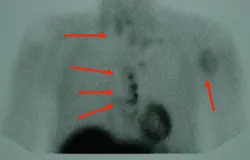
- Imaging studies – Ultrasound, radioactive tracer (sestamibi) scans, or 4D-CT scans can help localize abnormal glands.
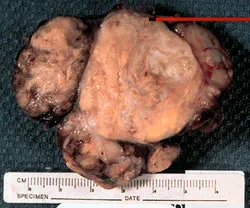
- Intraoperative findings and pathology – The diagnosis is often confirmed during or after surgery based on the appearance of the tumor and microscopic examination.
Unlike thyroid nodules, fine-needle aspiration biopsy (FNAB) is rarely used or helpful for parathyroid cancer. FNAB can sometimes spread tumor cells and is usually unable to distinguish between benign and malignant parathyroid lesions.
How is Parathyroid Cancer Treated?
Surgery is the mainstay of treatment. The goal is the removal of the cancerous parathyroid gland along with surrounding tissues that may also be cancerous. This may include part of the thyroid lobe, adjacent soft tissue, or lymph nodes if involved.
Key surgical approaches include:
- Focused parathyroidectomy: The surgeon identifies the location of the diseased parathyroid gland(s) before the operation and removes the diseased gland(s) and any affected tissue during the surgery.
- Bilateral neck exploration: The surgeon explores both sides of the neck to examine all four parathyroid glands. The surgeon decides which gland(s) and tissue to remove based on size, color, and texture.
Because parathyroid cancer can be locally invasive, initial surgery performed by an experienced endocrine surgeon offers the best chance for long-term cure.
Additional Treatments
Unlike many cancers, chemotherapy and radiation are not usually effective for parathyroid cancer. Radiation may sometimes be used to reduce the risk of local recurrence after surgery.
When the cancer cannot be fully removed or has spread, treatment focuses on controlling calcium levels, which may include:
- Medications (such as cinacalcet) to lower calcium levels
- Bisphosphonates or denosumab to protect bones
What is the Outlook for Parathyroid Cancer?
The outlook depends on how early the cancer is detected and whether it can be completely removed surgically.
- Patients who undergo successful parathyroidectomy often do well, with long-term survival possible.
- However, recurrence is common, sometimes many years after initial treatment.
- Lifelong follow-up with blood tests and imaging is crucial for detecting recurrence early
Next Steps
If you or a loved one has been diagnosed with a parathyroid condition, the team at the Columbia Parathyroid Center can help.
Columbia Parathyroid Center surgeons perform minimally invasive parathyroid surgery in over 97% of patients, and 95% of our patients go home the same day after a 4-hour observation period in the recovery room. Our surgeons have more experience, which translates to better results and fewer complications.
To learn more or schedule an appointment with Columbia's Parathyroid Surgery team, call 212-305-0444 or request an appointment online. We accept a number of insurance plans, and our team can help confirm your coverage.
Related
- The Parathyroid Glands: What are they?
- Primary Hyperparathyroidism
- Secondary Hyperparathyroidism
- Parathyroid Surgery
- Re-operative Parathyroid Surgery
This content has been created by Columbia’s Health Guide Team. Learn more about our efforts to bring you the clearest, most accurate, and most human health resources available.