
Guide to Thyroid Nodules
On Page Nav:
Reviewed by the physicians of Columbia’s Thyroid Surgery Team, February 2026
Thyroid nodules are growths or lumps that form within the thyroid gland, a butterfly-shaped gland located in the front of the neck. While most thyroid nodules are harmless, a small percentage can be cancerous or cause other thyroid problems. Thyroid nodules are very common and often discovered during routine exams or imaging tests.
Key Facts
- Thyroid nodules occur in 15-30% of the US population.
- They can cause the thyroid to produce excessive thyroid hormones, leading to hyperthyroidism.
- Diagnosis and treatment may involve specialists in endocrinology and endocrine surgery.
What Causes Thyroid Nodules?
Thyroid nodules can develop for several reasons, including:
- Iodine deficiency – Low levels of iodine in the diet may contribute to nodule development.
- Overgrowth of normal thyroid tissue – Sometimes referred to as a thyroid adenoma, these growths are benign but may cause a hormone imbalance.
- Thyroid cysts – Fluid-filled nodules that may form from degenerating thyroid adenomas.
- Thyroiditis – Inflammation of the thyroid (such as Hashimoto's thyroiditis) can cause nodules.
- Thyroid cancer – Although less common, some nodules may be malignant.
What are the Symptoms of Thyroid Nodules?
Many thyroid nodules do not cause symptoms. When they do, symptoms may include:
- A visible lump in the neck
- Difficulty swallowing or breathing if the nodule is large
- Hoarseness or voice changes
- Overproduction of thyroid hormone (hyperthyroidism), leading to symptoms like weight loss, rapid heartbeat, or nervousness
- Underproduction of thyroid hormone (hypothyroidism), leading to fatigue, weight gain, or sensitivity to cold (rare)
How are Thyroid Nodules Diagnosed?
Although thyroid nodules can be identified during a physical examination, nodules are often discovered incidentally during an imaging test being performed for another reason.
During diagnosis, the most important questions to ask are:
- Is the nodule cancerous?
- Does the patient have too much thyroid hormone in their body (hyperthyroidism)?
Doctors use several tests to diagnose and evaluate thyroid nodules:
- Physical exam – Feeling the thyroid gland for lumps or swelling.
- Blood tests – Measure thyroid hormone (T4) and thyroid-stimulating hormone (TSH) levels.
- Radioactive iodine scan – Shows whether a nodule is "hot" (producing excess hormone) or "cold" (not producing excess hormone).
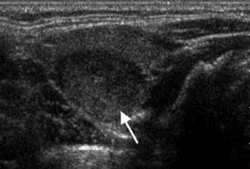
- Ultrasound (USG) – Helps determine the size, structure, and nature of the nodule (solid, cystic (fluid-filled), or mixed).
- Fine-needle aspiration biopsy (FNAB) – A thin needle is used to take a small tissue sample to check for cancer cells.
The FNAB may give one of 4 results:
- Non-diagnostic: This means that not enough cells were removed to make a diagnosis. Even in the best of hands, this happens in 5 to 10% of FNAB. Typically, the FNAB will need to be repeated.
- Benign: This indicates a 97% likelihood that the nodule is not cancerous. In most cases, patients with a benign biopsy are monitored with a USG and physical examination 6 months later, and then at regularly scheduled intervals.
- Malignant: This means that there is a 97% chance that the nodule is cancer, usually papillary thyroid cancer. Much less commonly, the FNAB can show a medullary or anaplastic thyroid cancer.
-
Indeterminate: This means that the doctors cannot determine if the nodule is cancerous, but the cells do not look normal. This category includes different readings, such as:
- Follicular lesion
- Follicular neoplasm
- Hurthle cell lesion
- Hurthle cell neoplasm
- Atypical cells/lesions
1 out of 5 people with an indeterminate biopsy will have cancer.
Genetic Signatures
To avoid unnecessary thyroid surgery, new diagnostic technology can help rule out the possibility of cancer in indeterminate thyroid nodules by analyzing the genetic signature of these nodules.
Because some genetic signatures are almost always benign with a risk of cancer < 5%, these nodules can be safely observed, while suspicious genetic signatures typically have a ~50% risk of cancer, in which case surgery to definitively rule out cancer is warranted.
Identifying some specific mutations can confirm cancer with >95% accuracy, which may change how your doctors counsel you about thyroid surgery.
How are Thyroid Nodules Treated?
Treatment depends on the type, size, and activity of the nodule:
Lifestyle and Monitoring
- Many small, benign nodules only need routine monitoring with ultrasound and exams.
Medicines
- Thyroid hormone suppression therapy may be used in some cases to shrink nodules.
- Anti-thyroid medications can help if the nodule is producing too much hormone.
Surgery
- Lobectomy: Removal of the lobe of the thyroid that contains the nodule.
- Thyroidectomy: Removal of the entire thyroid if cancer is found or strongly suspected.
Minimally Invasive Treatments
- Radiofrequency ablation (RFA) or ethanol injection can sometimes shrink benign nodules without surgery.
What is the Outlook for Thyroid Nodules?
- Most thyroid nodules are benign and can be safely monitored.
- If cancer is detected, thyroid cancers generally have a very high survival rate when treated early.
- Ongoing follow-up is important, even for benign nodules, to track growth or changes.
Next Steps
If you or a loved one are dealing with a thyroid nodule, the team at Columbia’s Thyroid Center can help. Our dedicated Thyroid Biopsy Clinic offers a safe and streamlined way of evaluating your risks, and our field-leading Interventional Endocrinology Program gives you access to innovative, non-invasive treatment options not available elsewhere.
To learn more about treatment for thyroid nodules or to make an appointment, please contact Columbia's Thyroid Surgery team by calling 212-305-0444 or completing our online request form. We accept a number of insurance plans, and our team can help confirm your coverage.
Related Programs
Related Conditions
This content has been created by Columbia’s Health Guide Team. Learn more about our efforts to bring you the clearest, most accurate, and most human health resources available.