
The Parathyroid Glands and Their Functions
The parathyroid glands are four small pea-sized glands, two on either side of the neck behind the thyroid gland. About 10% of the time, the parathyroid glands may not be in their typical locations and sit in what are known as "ectopic" locations.
Key Facts
- The parathyroids maintain healthy blood calcium levels, an essential function for healthy cellular behavior.
- Parathyroid hormone (PTH) increases calcium levels by taking calcium from bones, increasing calcium absorption from food, and decreasing calcium eliminated in urine.
- Excess PTH can weaken bones and lead to symptoms like kidney stones, fatigue, and bone pain.
What Do the Parathyroid Glands Do?
The parathyroids control blood calcium levels by producing parathyroid hormone (PTH) in response to low levels.
Why Are Calcium Levels Important?
Every cell in the body uses calcium to control its basic functions and communications, so calcium levels must be tightly controlled.
How Does PTH Control Calcium Levels?
PTH increases calcium levels by breaking down bones and taking their calcium, increasing calcium absorption from food in the intestines, and decreasing the amount of calcium lost by the kidneys in the urine.
In general, calcium and PTH levels move in opposite directions—as the blood calcium increases, the PTH level decreases, and as the blood calcium level decreases, the PTH level increases.
What is Hyperparathyroidism?
Hyperparathyroidism is a condition where the parathyroid glands produce too much PTH. This excess can lead to high blood calcium levels and can cause symptoms that include:
- Abdominal pain
- Bone loss (osteoporosis)
- Bone pain
- Fatigue
- Increased thirst
- Kidney stones
- Muscle weakness
- Nausea
There are three types of hyperparathyroidism:
- Primary hyperparathyroidism: Caused by a non-cancerous tumor on one or more parathyroid glands.
- Secondary hyperparathyroidism: Caused by another condition that lowers calcium levels, such as chronic kidney disease or vitamin D deficiency, causing PTH levels to rise.
- Tertiary hyperparathyroidism: Caused by hyperactive parathyroid glands continuing to overproduce PTH even after the principal cause has been resolved.
The Parathroids and Vitamin D Regulation
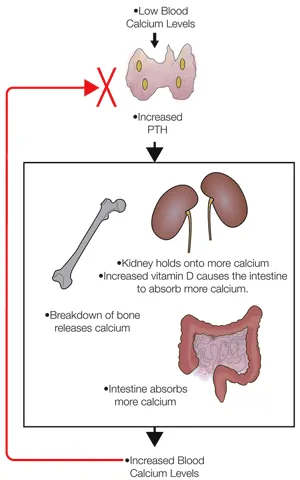
Vitamin D is an important part of how the body controls calcium levels. Vitamin D can either be made by exposure to sunlight or absorbed in food. PTH then activates vitamin D, which helps the body absorb more calcium from food.
Unfortunately, up to a third of people may not have enough vitamin D and, therefore, may not absorb enough calcium from the food that they eat. The body then makes more PTH to raise the calcium levels, leading to secondary hyperparathyroidism.
Parathyroid disease and vitamin D deficiency are often seen together since vitamin D deficiency is so common, and vitamin D deficiency can have effects on the parathyroid glands.
Vitamin D deficiency can lead to temporary hypocalcemia (i.e., calcium levels that are too low) after successful parathyroid surgery, but may also lead to issues like kidney stones and very high calcium levels if the deficiency is corrected too fast before the operation.
How is Hyperparathyroidism Treated?
Hyperparathyroidism is typically treated with a surgical procedure called a parathyroidectomy. One or more hyperactive parathyroid glands are removed to restore healthy PTH levels.
Learn More About Parathyroid Surgery
Next Steps
If you or a loved one are dealing with a parathyroid issue, our team at the Columbia Parathyroid Center is here to help. Call 212-305-0444 or request an appointment online. We accept a wide range of insurance plans, and our team can help confirm your coverage.
Related
- Primary Hyperparathyroidism
- Secondary Hyperparathyroidism
- Parathyroid Cancer
- Parathyroid Surgery
- Re-operative Parathyroid Surgery
This content has been created by Columbia’s Health Guide Team. Learn more about our efforts to bring you the clearest, most accurate, and most human health resources available.