
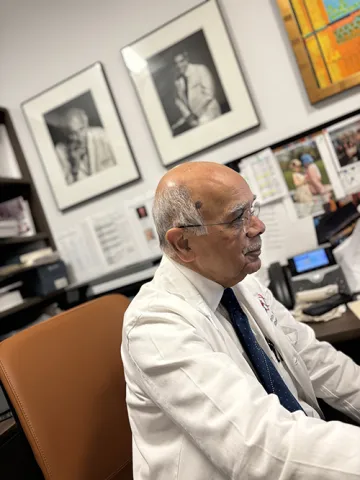
Hidden deep within NewYork-Presbyterian Hospital is a small, unremarkable office. Amidst neat stacks of papers and books sits Dr. Syed Tasnim Raza.
Dr. Raza is a rarity: a seasoned cardiothoracic surgeon who has forgone the operating room to dedicate his time to the hospital's step-down unit, a space for patients stable enough to move out of the intensive care unit but ill enough to require a higher level of monitoring than a traditional hospital room. However, it only takes a few minutes with Dr. Raza to understand the wealth of information he has to share, not just about his discipline, but art, history, and philosophy. He has a knack for making even the most circuitous conversation make sense. He knows exactly where he is heading, but wants to take you on the scenic route.
Sit down to talk with him, and he opens with his favorite topic: family. Like the proud father he is, he fires up photos, websites, and PowerPoint presentations. He smiles and shrugs. "Well, I have a very large family."
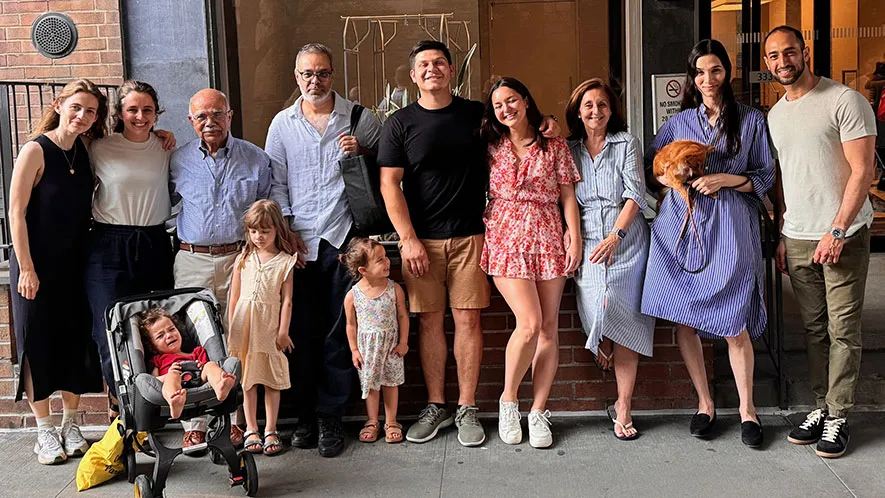
He presents slideshows of his son's city-spanning art exhibits and whiffs of his perfumer daughter's latest collection. As he goes through the roster, he takes a moment to talk about his wife, Nazli. It’s both a proclamation of his deep love for her and a primer for the genealogy lesson that follows. “We are both on our second marriage and we have made a beautiful family together that spans the world. I am Pakistani-American, my wife, Turkish-American. My daughter-in-law is German. Nazli’s one son-in-law is Egyptian-American and the younger one, Mexican-American.
Sensing that I might be having trouble keeping track of everyone, he resets and patiently walks me through the family tree, pausing to make sure I’m following. "So before Nazli, I was married to a woman who had two children from before. So I have those two stepchildren, then these two stepdaughters from my wife, and our two kids. He pauses and smiles wide. “I seem to be collecting kids and a wide variety of family. I have six other siblings besides me, and they all have kids. There are 35 of us. So far."
He is eager to extoll the accomplishments of his siblings. "Three of my sisters are physicians.”
One is a Professor of Medicine here at Columbia—Azra Raza, MD. “She is probably the world's number one authority on one kind of cancer called myelodysplastic syndromes, or MDS." He reaches over to grab a nearby paperback. "That's her book on cancer." And in what will become a regular trend, he offers a gift. "If you'd like, I'm happy to give you a copy of it."
He continues bragging about his sisters. "I have a sister who's a radiologist. She's a mammographer at Harvard in Boston. She wrote the book on MRI of breast cancer. Then I have a sister in Baltimore. She's a pediatrician and was the medical pediatric oncologist at Johns Hopkins for some years."
When asked what drove him to become a surgeon, his answer is delivered with a chuckle.
"I didn't have a choice."
Destined to be a Doctor
"I was born with clubfoot. My mother was devastated because I was the first son. She took me to the surgeons in Delhi in India, in 1946, when I was two weeks old. She made a covenant with God that if I grew up to be normal, she would make me a doctor so that I could help others. Since I was four years old, they always called me doctor."
His mother played another part in shaping his journey, when, in May of 1963, she asked him to come with her to the hospital. "I was 16 years old at the time. My father worked in government service and was out of town. So, I went with her to the American missionary hospital."
He sat in the waiting room, watching a black and white television. What he saw would change his life forever. "They were showing one of the first heart valve replacement surgeries ever done in America, back in 1961. I sat there watching this operation for an hour and a half, two hours. I was so impressed."
"I came home and wrote a long letter to my sister, who was doing a master's in Canada at the time. Eight pages long, describing everything I saw. I told her, "This is what I want to be." Five years ago, she brought the letter back to me. "Here, you wrote this," she said.
True to his 16-year-old self, Dr. Raza stayed on that chosen path until he became a heart surgeon. "I finished medical school in December, 1970. I came to America in June, 1971. I spent a year in Cincinnati, then went to Buffalo, where I stayed for 35 years. That's where I trained."
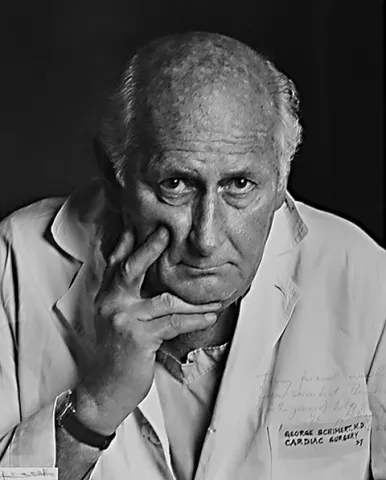
He pauses, turning to the framed photos on his wall. "That's my mentor in heart surgery, George Schimert. He taught me everything I know. And that's my mentor in thoracic surgery, Dick Adler. Both were like a father to me."
The Art of Heart Surgery
The mention of Buffalo spurs him to pull out a new file. "This is an illustration I made for a group in Buffalo. It was my first logo—black and white—showing an internal mammary artery graft and a saphenous vein graft on the heart. That's what we did: bypass surgery. I love that drawing." He shows more examples of his anatomical drawings, now a lost art for surgeons.
"We used to make drawings of every operation we did. But once electronic medical records came out, we couldn't draw anymore. So I've been making pre-drawn illustrations of all the different operations. We can stick them into the medical record and say, "This is what we did." I've been sitting here making these illustrations. I do have some skill, though clearly not on the level of my son. But I make my own drawings."
The conversation has already spanned a dozen topics, all skillfully connected and referenced. And just as the scope of the conversation seems to be set, he breaks into a smile.
"Oh, these are some of my passions: art, reading, heart surgery." He has a soft spoken demeanor that makes you lean in to listen, like co-conspiritors sharing a secret. "But my real passion is history."
A Historic Connection
"I just finished my master's in history. I was speaking with Alex Poots, who was the artistic director of The Shed at the time. He asked what I was doing with myself. I said I was still working, but also interested in the history of medicine."
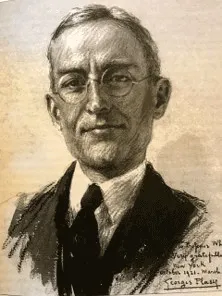
"I had been drawn to a book by Dr. Allen Whipple, the former chair of surgery here at Columbia and a famous surgical innovator. His parents had been missionaries, and he was born in Iran. When he finished being chairman here in 1946, he went back to Iran for two years, where he wrote a book called The Role of the Nestorians and Muslims in the History of Medicine. It was this book that sparked my interest in the history of medicine from that era."
"Alex listened to me talk for some time, and then said, "You need to talk to my wife." His wife, Kathryn Spellman Poots, is a member of the Faculty at Columbia University and the Aga Khan University's Institute for the Study of Muslim Civilizations. "His wife is now a very good friend of mine. She's an authority in the field. It turns out there are 100 people working on parts of Islamic history at Columbia. She brought them all together in the Middle East Institute."
Dr. Raza was accepted to the program and finished his master's in three years. "It was a great experience. The Golden Age of Islamic Medicine started when the Abbasid dynasty was established. The empire stretched from India to Spain. They made advances in many fields, including medicine."
Knowing Where We Came From
"For many people, what they know about the history of medicine is very limited. People know that Hippocrates started the whole shebang. Galen came about 500 years later. But there's so much more to it."
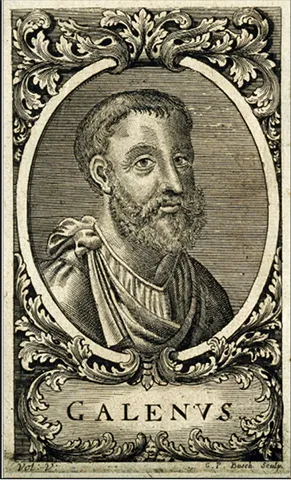
What follows is a fascinating rollercoaster ride through the history of surgery and medicine. He waxes poetic while offering visuals that highlight the accomplishments of Islamic Golden Age pioneers of medicine and science, accomplishments that are relatively unknown in Western medical education. He bounces back and forth between continents to mark when breakthroughs occurred and new discoveries moved the field forward.
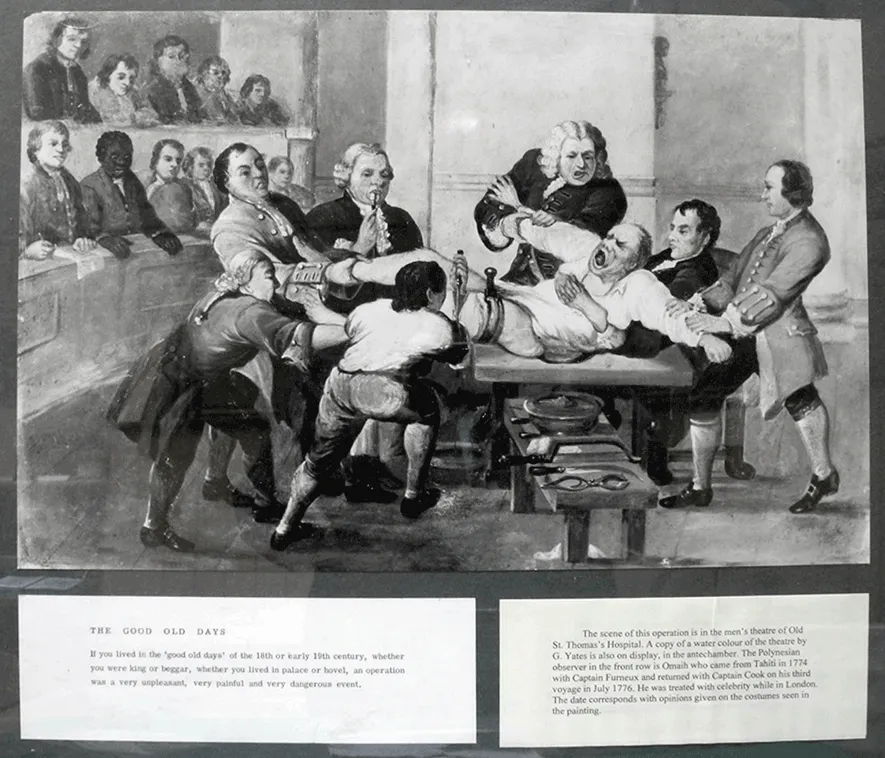
He speaks at length about the horrors of surgery in a world before anesthesia, a time when death was likely and speed was king. "Robert Liston was a famous surgeon in London. “This” he notes, pointing to a slide, “is an amputation of the thigh. It is over in a flash, from first cut to final stretch. The whole procedure has taken thirty seconds. Thirty seconds of remarkable dexterity, flashing blades, rapid moments and movements, and brilliant showmanship. Thirty seconds of such pain that few patients are ever able to put it adequately into words. It's horrifying. Before anesthesia, that was the way it was done."
The list goes on. Blood types. Anatomy. Electrocardiograms. And, of course, heart surgery. All topics skillfully connected, any questions answered and used as jumping-off points for the next part of the lesson. As he brings his lesson into the current moment, he asks the obvious question for us. "Why do we need to know this? It makes us aware of our past. So there's a warning, so we can learn from the mistakes people have already made in the past. It's a source of inspiration; well, if they could do this in the 1,500s, we should be able to do more. It provides one with competitive insights. Knowing the interconnected history makes us better at what we do."
Redefining a Role
Perhaps the only time Dr. Raza seems hesitant to speak is when he is asked to sing his own praises. But as possibly the only full-time dedicated cardiothoracic surgeon to manage a step-down unit, his role is worth diving into. And he's eager to give credit to his team.
"The step-down unit is the postoperative surgical floor where patients recover after heart surgery. After their procedure, they initially go to the ICU for observation. They then come to the step-down unit on their way home or discharge."
"This is a very unique model that Dr. Craig Smith created here. There's no other place with a semi-retired heart surgeon managing postoperative patients on the floor with a group of PAs covering 24/7/365. We go even further than a traditional step-down."
"It's really unlike any other place. I worked for 35 years in Buffalo, and they didn't even have a step-down unit. Once you got to the floor, the surgeon was at home and the nurse was at the bedside. There was no middle coverage. And that means that if there is a problem, there will be delays in addressing it."
Dr. Raza was quick to grow the program. "When I was hired, there were some PAs here already, but I expanded things a little bit more. We hired enough that our team can provide for 24/7/365 coverage. Now we have 23 PAs that work with me, that I hire and train, and then they do all the work. And I keep getting all the credit."
For someone who claims to be semi-retired, his workload is surprising. "I supervise them, I make rounds with them. I don't see all 36 patients every day, but I see the more critical ones and the new ones. If somebody needs help, they'll call me. So I think the patients benefit from this model. They get very good care."
He attributes the success of the program to his team, but acknowledges that he adds an important contribution. "I think I can pick up on problems much earlier because I've seen them all. As a surgeon, I performed a wide variety of surgeries. I did everything from pacemakers to coronary bypasses to valve surgeries to heart transplants, everything. Many of these complications that I can manage on the floor normally would require a consult, which wastes precious time. Addressing things sooner is a benefit to the patients."
"I've seen so many different things over my career. Here, I can put that to use."
Being Good at What You Do
So after all this time, does Dr. Raza think about changing his semi-retired status to the real thing? "Well, I have other things in mind that I want to do. I may do something more with my degree someday. I want to spend more time with my grandkids. I also have some books in my head that I want to write."
"But both my chiefs—Dr. Bacha and Dr. Takayama—invited me to their annual review. Bacha said, "We don't have anything to tell you except this: you're doing an excellent job. Please don't leave." So I'm under pressure not to quit. That's the problem with being good at what you do. You become valuable, and no one wants you to go anywhere. But I don't mind. I love being needed."
He straightens up and grins, indicating the lesson is ending. "We're all here to take care of the patients. That's the bottom line. You do what needs to be done. You don't count the hours. You don't count the steps. You don't ask who's responsible. You just do it. And you hope someone will do the same for you when your turn comes."
Related:
- What is a Step-Down Unit?
- Your Heart Has a Brain of Its Own
- Heart Disease Is Getting More Complex — But So Is Our Toolbox
- State of the Union: The Stealth Innovations of Modern Surgical Care