
Guide to Minimally Invasive and Video-Assisted Thoracic Surgery (VATS)
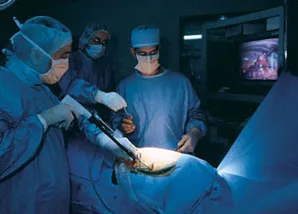 Minimally invasive thoracic surgery, also known by the name VATS (short for Video-Assisted Thoracic Surgery), is used for a variety of diagnostic and therapeutic procedures. Benefits of the minimally invasive approach include less postoperative pain, shorter hospital stays, faster recovery from surgery, and a quicker return to full activity.
What is VATS?
VATS is a procedure that involves smaller incisions in the chest wall than traditional “open” surgery and does not require the need to spread the ribs to gain access to the lungs or esophagus.
VATS uses a technique called thoracoscopy to look inside the chest without making a large incision.
What is Thoracoscopy?
Thoracoscopy refers to procedures performed using a thoracoscope, which is a flexible tube equipped with a small camera and light.
The thoroscope is inserted through one or more small openings between the ribs. The camera sends detailed images to a monitor, allowing the surgical team to examine the lungs, lining of the chest (pleura), and other thoracic structures in real time.
In addition to VATS, thoracoscopy can be used to diagnose conditions, take tissue samples (biopsies), drain fluid, or perform other treatments.
Thoroscopy can be performed with a single port for both the horoscope and surgical instruments (uniportal video-assisted thoracic surgery, or Uni-VATS) or with multiple ports where one incision is made for the surgical instruments and another for the thoracoscope.
What Conditions Can Be Treated With VATS?
Some of the more common diseases being treated with VATS include:
Emphysema — During Lung Volume Reduction Surgery (LVRS), one incision permits access of the viewing instrument (thoracoscope). Forceps and a surgical stapling instrument are used to remove the affected tissue through two other incisions.
Interstitial Lung Disease — The diagnosis of interstitial lung disease has become significantly more accurate as a result of VATS. Multiple areas of the lung can be biopsied and scanned to determine the presence of this disorder without the need for a large incision.
Lung Cancer — VATS is used frequently to assist in the diagnosis, staging, and treatment of lung cancer. In addition to aiding in the diagnosis of pulmonary nodules, VATS can significantly reduce the morbidity associated with the traditional surgical removal of lung nodules.
Myasthenia Gravis — VATS is used to remove the thymus gland through incisions under the arm. Experienced surgeons can also perform transcervical thymectomy, a minimally invasive procedure in which the thymus is removed through a small incision in the lower part of the neck.
Spontaneous Pneumothorax — VATS affords better visualization of the entire lung surface in patients with spontaneous pneumothorax (collapsed lungs). Patients who receive this procedure also experience less postoperative pain than traditional surgical methods.
Hyperhidrosis — Performed in the sympathetic nerve through two microscopic incisions, Endoscopic Thoracic Sympathectomy (ETS) seeks to eliminate the constant stimulation of sweat glands in patients with hyperhidrosis, while maintaining other normal nerve function.
Thoracic Outlet Syndrome — The Transaxillary Approach for Thoracic Outlet Syndrome is the preferred method of treatment for patients with severe symptoms related to the compression of the brachial plexus. The transaxillary approach combined with video assistance affords complete visualization of the thoracic outlet through a small incision, enabling decompression with less postoperative pain.
Stories & Perspectives
Leah Richter underwent a VATS lobectomy for lung cancer on a Tuesday and was discharged three days later. Read Leah’s story.
Next Steps
If you need help for a lung or chest issue, we’re here for you. Call (212) 305-3408 or request an appointment online to get started today.
Related Services
- The Center for Advanced Lung Disease and Transplantation at Columbia
- Emphysema & COPD Surgery Program
- Interventional Pulmonology Program
- The Center for Hyperhidrosis
See all Related Services
Related Topics
- COPD/Emphysema
- Hyperhidrosis
- Interstitial Lung Disease and Pulmonary Fibrosis
- Lung Cancer
- Myasthenia Gravis
- Thoracic Outlet Syndrome
- Uniportal Video-Assisted Thoracic Surgery (Uni-VATS)
See all Related Topics
This content has been created by Columbia’s Health Guide Team. Learn more about our efforts to bring you the clearest, most accurate, and most human health resources available.