

What happens when a surgeon turns his eye from the operating room to crime fiction? In "Stone Hearts", Craig R. Smith, MD, cardiac surgeon and former Chair of the Department of Surgery, builds a medical caper rooted in transplant, intrigue, and the peculiar moral weather that hovers above and beyond the hospital.
Follow along each Friday as we release the novel one chapter at a time. You can also see more on Dr. Smith's Substack, Long Incision.
In Chapter Fourteen: Dulcinea, Reggie’s impulsive dive into the Hudson River at Tubby Hook was followed from his point of view. A wary, suspicious man and woman on a sailboat moored just south of the Inwood Canoe Club dock reluctantly rescued Reggie from the cold river and allowed him to stay on deck under a blanket for the night.
Spring, 1974
Reggie woke to the sound of the hatch opening. The air was clear and cold. Every surface was covered with a thin mantle of dew. The heavy green blanket was scratchy against his bare skin but he was still warm. He was startled by a new view over the bow—not the Tappan Zee at the distant horizon, but the George Washington blotting out part of the sky. The man appeared at the top of the companionway ladder, carrying a tote bag decorated with a jaunty anchor over a cartoon background of sun and waves, which he placed next to Reggie’s blanket. “I found some old clothes that might fit. You’re a bit bigger than me.” The man nodded toward the sad pile on the deck, and added “You can throw those away, or we’ll give you a plastic bag. Get dressed, and come on down for breakfast. Grace is eager to hear your story.”
The underwear fit. The khaki pants were a little short; the blue flannel work shirt was close enough. Filling the bottom of the bag was a faded, shapeless LL Bean barn coat that fit well and cut the cold. Reggie salvaged his own socks, which had mostly dried, and his black high-tops, which had not. He picked his soaked wallet out of his pants pocket then flung the rest of his clothes as far as he could to the west off the starboard rail and watched them float north before sinking. After his best folding efforts the blanket still bulged out of the tote bag. He carried both down through the companionway into a warm, tidy galley space. The man was standing over the stove. A woman was seated at the table. “Have a seat!” The man said, accepting the bag and blanket. “I’m Peter, this is Grace. And you are?”
“Reggie. And I can’t thank you both enough. I think I would’ve died out there, and you had no reason to get involved.”
“You’re right about that,” said Grace, with a faint smile. She was a striking woman, younger than Peter, with jet-black hair past her shoulders and piercing blue eyes. Even seated, she appeared trim, tall, and commanding. “Peter promised you’d repeat your story for me. He didn’t want to spoil the punch line—why some guy ends up in the Hudson River at 3 AM, in early March. I can’t wait!”
Peter added, “No pressure, just tell Grace what you told me. I’m making scrambled eggs. That okay for you?”
“Eggs would be great! More than I have any right to expect,” Reggie said. He repeated his story, as verbatim as he could manage, assuming they would be studying every detail for consistency.
“Interesting…” Grace said, nodding her head slightly. “I didn’t catch the name of the place.”
Serious trouble already. “Irish joint. Mc-something.”
“That memorable, huh? Which side of Broadway?”
He knew he’d better fabricate quickly. “The far side. East, that’d be.”
Reggie relaxed slightly when she conceded “We’re not big Inwood bar people,” and switched topics. “So it was you and two other guys. What are their names?”
“Jean and Elias, and me.”
“EL-ee-us…you mean ee-LY-us?”
“No, EL-ee-us, just like I said it. And it’s Zhon, the French way.” It was a relief to say two things that were true.
“So all three of you were winning a lot of money at eight-ball from one guy, or from a bunch of guys? Or one of you was winning against one guy, and he was the big Black guy who chased you into the river?”
“We switched it up playing doubles against whichever pair felt like playing. The big Black guy played the most, and lost the most.”
“He was the one you called a ‘splib,’ who rallied a bunch of his friends to come after you? Was he the only Black guy? Or the Blackest guy? The meanest Blackest guy?” She seemed satisfied rhetorically scoring points and didn’t wait for answers. “I hear you told Peter what kind of crowd to expect in that neighborhood—thanks for the helpful travel tip! Did you hustle any white guys? Or brown Spanish guys?”
“Well, yeah…no, it was all Black and Brown.”
“Sure sounds like an Irish place to me! And you three White guys like to hustle pool in that particular bar, in the middle of the night, with no better game plan than to run away?” She shook her head unsympathetically. Peter placed three plates with scrambled eggs on the table, and everyone reached for forks, salt, and pepper. Grace downed one forkful of eggs before continuing. “Another thing that puzzles me—you implied you knew, or assumed, the Black guy—the ‘splib’—couldn’t swim. A common dismissive stereotype I’ll overlook, but if that’s what you thought, why’d you swim halfway to Jersey? You could have curled around into the dark near the dock just long enough to lose him, then go back and rendezvous with your friends. Assuming you clever pool sharks had some routine for a rendezvous.”
“Coffee?” Peter asked. Nods all around, he filled three cups.
Grace was not distracted. “We know this area well, and the street parking is mostly east, not west, so it seems odd you ran off to the west end of Dyckman. Which reminds me to ask, whose car is it? Not yours, I assume.”
Reggie was slow-chewing his eggs, using the extra time to think about how to handle this harpy. He’d observed that the entire wall opposite him, behind the table, was filled with electronic equipment, much more industrial-looking than what he’d expect from mere audiophiles. Multiple cables were bundled together overhead and passed through the ceiling in a corner of the cabin. Maybe he wasn’t the only person on board with something to hide. That insight, combined with the warmth and the food, allowed him to relax just enough to savor his survival and contemplate the tantalizing possibility of a fresh start—even a new life? If nothing else, Reggie was certain he wanted to bury that pathetic Mulberry Street loser forever. It was time for New Reggie to get up off the canvas.
“Maybe we can agree I had my reasons for diving into the Hudson, and you have your reasons to wonder why, but just maybe you also have your reasons to worry about having any stranger on board. Can we call it a draw? It doesn’t change the fact that you saved my life, and I owe you, big-time.”
Peter and Grace looked at each other thoughtfully. “Fair enough, for now.” said Peter. “But let’s think through the next steps. There are people who will notice you’re missing. If I drop you on the dock today you can end the mystery for everyone, or end it selectively, as you see fit. Either way it may be very hard for you to completely forget about me and Grace and Dulcinea. And you’re right, we need you to do that.”
“Forget about who? What boat?”
“Yeah, that’s a good answer, owing me big-time and all. But here’s where Grace has a point—it would have been cleaner to leave you in the river, maybe even hold your head under until the bubbles stopped.” Underneath the banter, Reggie guessed that Peter was cold-steel serious. He wondered why Grace was keeping both hands under the table, even though she hadn’t finished her eggs. This was day zero of Reggie’s new life—he couldn’t let it slip away so easily.
“I’m trying to help you here, without actually jumping back in the river in handcuffs! If nobody knows I’m alive, isn’t that as good for you as having me dead?”
Peter gave the question a respectful pause for thought. Grace’s unrevealing eyes stayed fixed on Reggie. “Not quite,” Peter said. “And it’s another reminder how much easier it would have been to let you drown. Difference between passive and active. Not a distinction that bothers Grace, by the way. Tell me why we should believe that nobody will know.”
Reggie had to admit it was a good question. “My friends at college will figure I dropped out, stayed back with my home crew. It’s not like I loved the place. I didn’t go to class much and hardly ever opened my mouth. I might have flunked out anyway. The guys I was with last night will sure wonder what happened, but we don’t how they made out either. And it’s not like we were close, more like hustling partners. They won’t be looking for trouble.”
“Parents? Other family?”
“I’m sort of an only child. I never see my sisters, they’re much older. My parents are usually in Majorca until May or June. My old man expects only the worst from me anyway. ‘A waste of two hundred years of pedigree,’ he likes to say. My old lady is…certifiable, but too smart to get locked up in Creedmore. They might wonder why they stop getting bills.”
Peter looked faintly sympathetic. Grace looked irritated. “So you’re the most alienated man on earth and no one will miss you,” she said. “That’s a kind of why, but not why we should trust you!”
“I get it, you’re taking a risk. But think of it from my side. I have a shot at a new life here. And there ain’t much to say for the old one.”
Peter topped off the coffee cups, ladled more eggs on each plate, and sat down on the bench next to Grace. “I say we finish breakfast and think about this, ” he said. Grace brought both hands back in sight, took a sip of coffee, and poked at her eggs. When breakfast was finished Grace cleared the table and scraped the plates into the galley sink. She turned and stood next to Reggie.
“No room in here for big unresolved arguments, so I’ll try to go along with Peter on this one.” She turned her gaze on Peter. “But I think we have to give the ‘nobody knows’ theory a dry run before we try the ‘new life’ theory. What I mean, Reginald, is that we’re sailing northeast out of the harbor tomorrow to get some work done. I think you need to stay right here on Dulcinea with us for the next week or so. You can have the starboard stateroom.”
Reggie didn’t dare admit it felt half-cool, being impressed by pirates. “I have a suggestion. If I can get back to my parent’s house today, and maybe to my dorm at Glassboro, I can collect some useful stuff, including some cash. If you’re not leaving until tomorrow.”
“Obviously you can’t just hop in a cab and zip around town by yourself,” Grace objected, although they both seemed to be thinking about it. “And you can’t be seen.”
“My parent’s house is empty. The neighbors aren’t close and they’re gone most of the time anyway. My dorm is trickier, but I have a second-floor single right off the stairwell. Midday the place will be mostly empty. And if it doesn’t look safe, we’ll just forget about what I have in my dorm.”
Grace spoke to Peter. “We do have some shopping to do. Let’s at least fetch the car and get started.” Peter nodded. “You’ll have to accept certain precautions,” Grace added, looking cooly at Reggie. She unlocked a cabinet, pulled out a revolver, checked the cylinder, and dropped it into her purse. Peter rummaged in another cabinet and pulled out what looked like two long choke-chain dog collars and a carabiner.
“You have a dog?” Reggie asked.
“On a sailboat?” Peter scoffed. “’Course not. A choke-chain’s a versatile tool.”

Peter laid Reggie’s hand-me-down barn coat on the table, passed a leash out through each sleeve, then had Reggie put on the coat. He created nooses through the rings at the cuff end of each chain, and looped them around Reggie’s wrists. Grace stepped in to hold up the back of the coat while Peter gathered the two chains between Reggie’s shoulder blades, passed them through the carabiner, and connected the two end-rings to a heavy leather leash. Peter steadily pulled slack out of the choke-chains until Reggie winced, then released the tension and passed the leash handle to Reggie. “You can be in charge of this rig until we’re on shore,” Peter said, “then I’ll take over. And don’t bother trying to shake them loose. Harder than it sounds, and real obvious.”
“I’ll go up and pull the dinghy around,” Grace said, then disappeared up the companionway.
Grace operated the dinghy’s tiny outboard motor on the short trip to the Canoe Club dock, riding the flood tide north. “If I’d just timed it right, I would have made it to Jersey,” Reggie observed.
“At slack tide, maybe, if you didn’t die of hypothermia,” said Grace, “but what’d you think you were gonna do when you got there?” Grace maneuvered the dinghy into the south corner of the dock closest to shore and tied it to a ring. Reggie handed the leash to Peter without prompting. At the top of gangway the two pirates and their captive walked past an open bay door in the boathouse. Two men fussing with equipment inside gave them disinterested glances.
As if reading Reggie’s mind, Peter said “We have an understanding with the Club. We tie up out of the way, we’re not here often anyway, and they get a nice cash payment every month.”
Grace scowled and shook her head. “As if he needs to know.”
They walked through the open chain-link gate, then east on Dyckman. Over the five blocks to the parking garage Reggie learned how to walk far enough away from Peter not to look intimate but without tensioning the leash. Grace dealt with the attendant while Peter and Reggie waited outside.
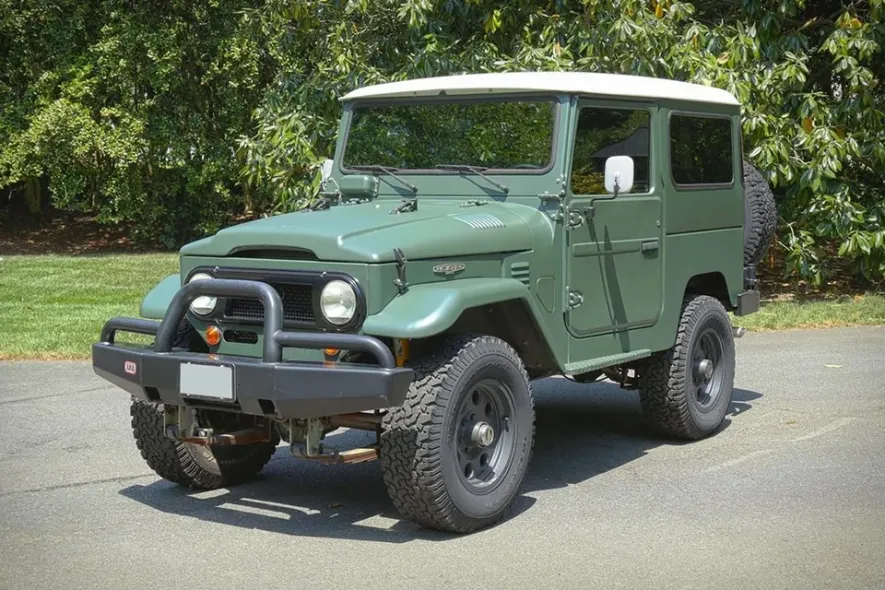
Grace pulled up to the curb in a gray Toyota Land Cruiser. They put Reggie in the front seat. Peter sat right behind him, laid the leash between the front seats back to his position, and gently pulled out all the slack. Grace passed her purse to the back seat. It was clear to Reggie that this was not a game for them. He was reminded how he’d felt on Mulberry Street. “You know, I’m sold on this plan, I’m not going anywhere.”
“Certain precautions,” Grace replied.
More Stone Hearts chapters:
Chapter 8: The Brothers Bessette
Related:
- A Conversation with Dr. Craig Smith on His Novel “Stone Hearts,” the Art of Writing, and the Surgeon’s Imagination
- For Us the Living: Reflections on 9/11 from Dr. Craig Smith
- Nobility in Small Things: A Look Back at The Leadership of Craig Smith, MD