
By Carla Cantor
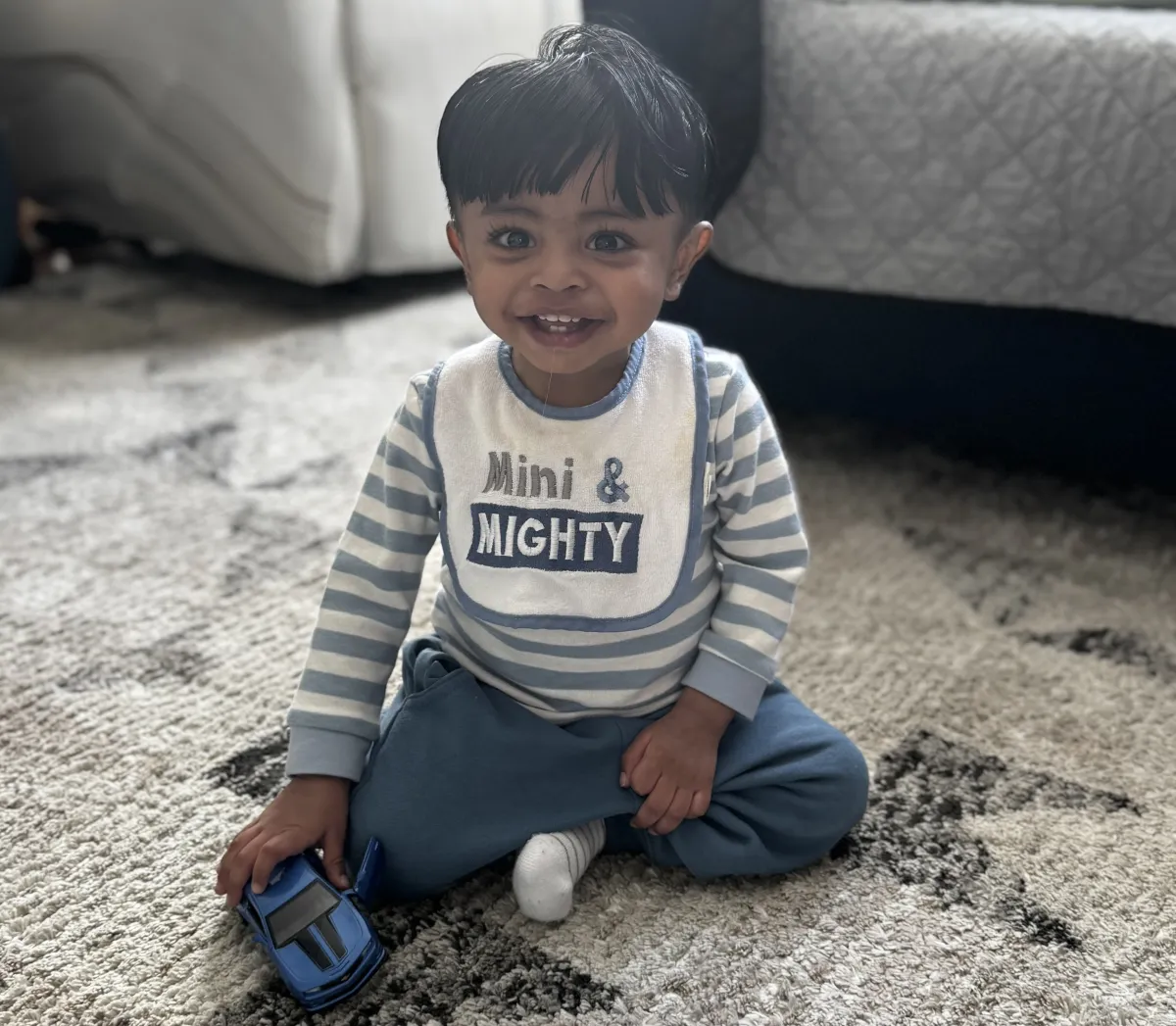
Eric Ramnarine is back in motion. After a liver transplant and subsequent complications that turned an expected two-week hospital stay into six weeks, the toddler is home in Bayonne, New Jersey, and looking for a little mischief.
“He’s laughing, high-fiving, getting into his older sister’s toys, and shaking his head ‘no’ a lot,” said his mother, Asha Ramnarine. “He’s growing into his personality.”
An ordinary childhood felt terrifyingly out of reach on New Year’s Day 2026, when Eric began bleeding internally from enlarged blood vessels in his esophagus. The hemorrhage was a severe consequence of biliary atresia, a rare, life-threatening disease affecting approximately 1 in 12,000 infants in the United States. The condition causes bile to become trapped in the liver, leading to progressive organ damage.
Eric’s earliest symptom was jaundice, the result of a buildup of bilirubin. At 8 weeks old, he underwent a Kasai portoenterostomy, an operation that creates a new drainage pathway from the liver, at The Bristol-Myers Squibb Children’s Hospital at Robert Wood Johnson University Hospital in New Brunswick, New Jersey (RWJBarnabas Health). Although the surgery does not cure biliary atresia, it can buy critical time for a child to grow. By age 6 about 30 percent of children require a liver transplant and up to 80 percent need one by adulthood.
The Kasai surgery bought Eric nearly a year. But a second bleeding episode later in January turned the long-term monitoring plan into an urgent search for a donor liver.
His surgeon at RWJBarnabas Health, Steven Stylianos, MD, was the chief of pediatric surgery at Columbia for over a decade before joining Rutgers as surgeon-in-chief of the Children's Hospital in 2024. A team he has known intimately and worked alongside for over twenty years, Dr. Stylianos referred Eric to Columbia for transplant.
5 Questions with Dr. Steven Stylianos – Committed to giving children the chance for a healthier future
A Collapsing Timeline
Pediatric hepatologist Mercedes Martinez, MD, medical director of Pediatric Abdominal Organ Transplantation at Columbia/NewYork-Presbyterian, began caring for Eric when he was first diagnosed. Recognizing that he might eventually need a liver transplant, she placed him on the waiting list early on as a precaution, hoping the Kasai procedure would keep him stable for years.
By mid-January 2026, however, that timeline collapsed. Eric developed cirrhosis, severe scarring of the liver that made it harder for blood to pass through the organ. Pressure built in fragile veins in his esophagus until they ruptured.
“His growth had slowed, and he was failing to gain weight,” Dr. Martinez said. “Once he began bleeding from portal hypertension, we knew the Kasai procedure was no longer working and his liver was failing.”
The Race for a Match
Securing a liver for a toddler presents unique challenges. Infants and young children require grafts precisely sized for their bodies, making a suitable donor organ difficult to find. Nationally, approximately 10% of children die while awaiting a liver transplant, largely because of a shortage of size-matched organs.
Eric's wait for a donor liver lasted only weeks. The Pediatric Liver Program at Columbia is home to one of the nation’s largest living donor liver programs. The program performs more liver transplants in children than any other in the region, surpassing its 500th pediatric transplant milestone in 2023.
Changing the Future of Living Liver Donation: A Conversation about Columbia’s All-Robotic Approach
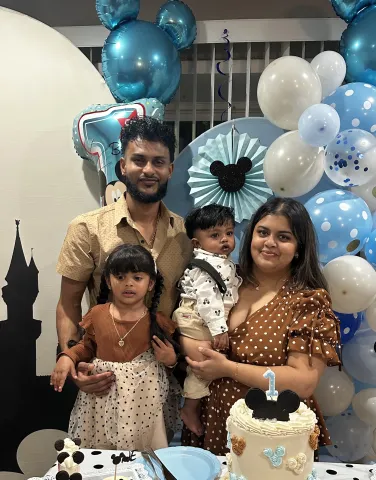
Because the family had met with the surgical team over the summer to prepare for a potential transplant, they faced the crisis with a measure of confidence. Still, the sudden escalation frightened Asha and her husband, Chatram. After two bleeding episodes, waiting no longer felt safe.
"We didn't want that to continue, because the doctors told us it would just keep happening again," Chatram said. "They said the best thing to do was get the transplant, and we trusted them."
The call came in the middle of the night on February 10. A deceased donor liver had become available from outside the region, prompting Asha and Chatram to bring Eric to the hospital at dawn.
A Delicate Operation
Peter Liou, MD, an assistant professor of surgery at Columbia University and an attending transplant surgeon at Columbia, led the six-hour procedure, which began at 6 a.m.
The donor liver had arrived the night before from outside the region, preserved on a perfusion pump. Unlike the traditional method of keeping organs on ice, the pump circulates warm, oxygenated, and nutrient-rich blood through the liver. This allows the organ to keep functioning while surgeons monitor its health. The technology can preserve the graft for up to 24 hours, extending travel distances and giving surgical teams more flexibility when scheduling procedures.
“In Eric’s case, the pump meant we did not have to transplant within eight hours or operate in the middle of the night,” Dr. Liou said. “We could begin in the morning and take the time required for a complicated operation.”
Because of his small size, Eric needed only 15% to 20% of the adult liver, leaving the remainder available for another recipient. Pediatric liver transplant survival rates are high, even exceeding those of adults, but procedures in infants and toddlers require exceptional precision. Surgeons must work within a confined field, connecting tiny blood vessels and ducts.
One Living Donation Saves Three Lives: NewYork-Presbyterian/Columbia Performs the First Domino Split-Liver Transplant in Adults in the U.S.
Dr. Liou likened performing pediatric transplant surgery to creating a delicate sculpture. “You have to be meticulous and highly detailed,” he said. “You’re sewing blood vessels as thin as a spaghetti noodle to another spaghetti noodle, using sutures so fine you need magnification to see them. You have to get all of the connections just right, and when it’s done, it is a work of art.”
While the transplant team worked, Asha and Chatram waited. After a tense afternoon, clinicians escorted them into the intensive care unit, where Eric lay sleeping with his incision closed and his breathing tube already removed.
“I was so happy I cried tears of relief,” Asha said. “I felt like I was finally able to breathe.”
Complicated Recovery
The transplant succeeded, but within days Eric developed postoperative ileus. This temporary loss of intestinal movement caused his abdomen to become severely distended. Concerned that the swelling signaled a serious complication, Dr. Liou brought him back to the operating room twice.
Eric’s setbacks kept him in the pediatric ICU for a month and two more weeks on the surgical floor. His recovery relied on a large team of specialists, including hepatologists, transplant surgeons, nurses, social workers, dietitians, pharmacists, and transplant coordinators.
“Guiding a child through transplantation is never the work of any single person,” Dr. Martinez said. “It depends on a multidisciplinary team working together every day, with parents and caregivers as essential partners.”
Growing Up After Transplant
When Eric returned home on March 20, recovery came in small increments. He initially needed 16 medication doses a day, including drugs to manage withdrawal symptoms after prolonged sedation.
During the hospitalization, his weight had fallen to the 1.6th percentile. Working with a hospital nutritionist, the family gradually transitioned him from purées and liquids back to solid meals.
By early April, Eric had regained his energy. His liver tests were nearing normal levels, and his weight had rebounded to the 25th percentile, appropriate for his height.
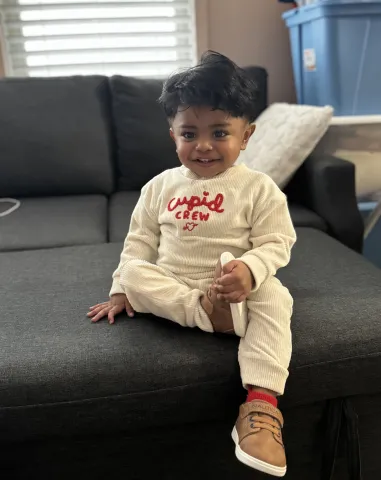
“He is eating. He is walking. He is behaving like a normal toddler,” Dr. Martinez said. “He smiles.”
Dr. Martinez will follow Eric through childhood and adolescence, likely until early adulthood, when his care will transition to an adult hepatologist. For now, he takes anti-rejection medication and drugs to prevent infection while his immune system remains suppressed. By one year after transplant, she expects him to need only a single anti-rejection medication, which he will continue for life.
Decoding Immunity with Computation
“The care does not end the day they go home,” Dr. Martinez said. “This is care for life.”
For Dr. Liou, the reward comes in seeing what becomes possible after a transplant.
“Once you fix the liver, these children go on to live normal lives,” Dr. Liou said. “They go to school, play sports, go to college, and have families.”
Asha and Chatram marvel at Eric’s resilience throughout the ordeal. His determination helped sustain them through the hardest moments. Now, they look forward to the ordinary childhood they once feared might be out of reach.
“We just want him to be healthy and happy and safe, and not have to go through this again,” Asha said. “He is our miracle child.”
Related:
- Navigating Biliary Atresia: Nate's Mom Shares Their Journey
- Bots for Tots: The First Program in the U.S. for Robotic Liver Surgery in Children
- Caracas to Santo Domingo: Creating Access to Pediatric Liver Transplant from the Ground, Up